

Subtotal $0.00


Table of Contents
- Firestone vs Midtown Tire: Quick Comparison Overview
- Tire Performance Across Road Conditions
- Tread Life, Durability, and Mileage Warranties
- Fuel Efficiency and Rolling Resistance
- Service-Level Comparison: Installation, Wait Times, and Support
- Signs You Need New Tires and When to Replace Them
- Auto Repair Services in West Atlanta: Local Options and Advantages
- Total Cost of Ownership: Price, Warranty, and Long-Term Value
- Which Option Wins for Your Driving Needs
- Frequently Asked Questions
Last Updated: September 25, 2026
Firestone vs Midtown Tire: Quick Comparison Overview
When you’re shopping for new tires, the choice between Firestone and Midtown Tire isn’t just about which brand sounds familiar. Both serve different customer needs, and the right pick depends on your vehicle type, driving habits, and what matters most to you: performance, longevity, or value. At TIPS Automotive, we help customers navigate this decision by breaking down what each brand delivers.
Firestone brings decades of heritage and a wide product range spanning budget-friendly options to ultra-high-performance tires. Midtown Tire, by contrast, positions itself as a service-oriented alternative with a focus on installation convenience and customer support. Neither is universally “better”, but one likely fits your situation better than the other.
Here’s what separates them: Firestone competes primarily on tire engineering and brand recognition, while Midtown Tire competes on the service experience. If you’re comparing Firestone vs Midtown Tire for your next set, this breakdown covers performance metrics, durability, cost of ownership, and the service experience you’ll actually encounter.
| Feature | Firestone | Midtown Tire | Best For |
|---|---|---|---|
| Tire Range | Budget to premium performance | Mid-range touring and all-season | Diverse vehicle types |
| Installation Speed | Varies by location | Typically 30-45 minutes | Time-sensitive drivers |
| Warranty Options | Mileage and road hazard available | Standard coverage included | Long-term value seekers |
| Service Locations | National chain presence | Regional availability | Local convenience |
| Performance Focus | Balanced across categories | All-season reliability | Practical daily drivers |
Tire Performance Across Road Conditions
Tire performance varies dramatically by vehicle type and driving environment. A tire engineered for an SUV performs differently than one designed for a sedan, and winter performance is a separate category entirely. Understanding these distinctions is critical because choosing the wrong tire for your vehicle type or climate can compromise safety and fuel economy.
Performance by Vehicle Type
Sedans and Compact Cars
Firestone’s Firehawk 500 INDY V2 and Firestone Champion Fuel Fighter are engineered for sedan-weight vehicles (2,500-3,500 lbs). These tires prioritize responsive steering feedback and lower rolling resistance for fuel economy. The Fuel Fighter uses a specialized tread compound that reduces energy loss as the tire flexes, translating to 1-2% better fuel economy than older tire designs. For sedans, this matters because lighter vehicles are more sensitive to rolling resistance changes.
Midtown Tire’s touring-class all-season options are typically designed for similar vehicle weights and prioritize comfort and predictable handling over sporty responsiveness. A Midtown tire on a sedan will feel stable and quiet but less communicative in cornering compared to a Firestone performance option.
SUVs and Light Trucks
Firestone’s Destination LE3 is specifically engineered for SUVs and light trucks (4,000-5,500 lbs). The tire uses reinforced sidewalls to handle the higher load and uses TractionTech technology, a tread design with variable sipe depths, to maintain wet traction throughout the tire’s life. As the tire wears from 10/32″ tread depth to 4/32″, the sipes continue to channel water effectively. This matters because many all-season tires lose wet grip significantly as they wear.
Midtown Tire’s SUV-focused options are adequate for normal driving but aren’t engineered for the same level of load capacity or wear-life performance. If you drive an SUV and frequently carry heavy loads (passengers, cargo, towing), Firestone’s load-rated options are the safer choice.
Performance and Sports Cars
Firestone’s performance lineup, including the Firehawk 500 INDY V2 and Firehawk GTA02, uses race-inspired tread patterns and advanced rubber compounds designed for high-speed cornering and responsive steering. These tires are rated for higher speed ratings (H, V, W, Y ratings) and use stiffer sidewalls to reduce flex during aggressive driving. The Pulse Groove technology channels water away from the contact patch, directly reducing hydroplaning risk in heavy rain.
Midtown Tire does not offer a true performance-oriented option. Their tire lineup is all-season touring-class, which is not suitable for performance driving. If you own a sports car or performance sedan, Firestone is the only choice between these two brands.
Wet and Dry Traction Performance
Wet Traction
Wet traction depends on tread design (how water is channeled away from the contact patch) and rubber compound (how much grip the rubber maintains when wet). Firestone’s premium all-season and performance tires use multi-groove designs and variable sipe patterns that excel in wet conditions. The Destination LE3 for SUVs and the Firehawk 500 for sedans both maintain wet traction better than mid-range competitors as the tire wears.
Midtown Tire’s all-season options provide adequate wet traction for normal rain but don’t match Firestone’s engineering in heavy rain or standing water. If you drive in regions with frequent heavy rainfall or thunderstorms, Firestone’s wet-traction advantage is meaningful.
Dry Traction and Cornering
Dry traction is where Firestone’s performance-oriented tires show the biggest advantage. The Firehawk 500 INDY V2 uses a tread pattern optimized for cornering grip and responsive steering feedback. The rubber compound is formulated to maintain grip during hard cornering, which matters if you drive on winding roads or need responsive handling in emergency maneuvers.
Midtown Tire’s tires prioritize predictable, moderate handling. They’re stable and safe but not engineered for the same level of cornering grip. For daily commuting on straight roads, this difference is negligible. For mountain driving or winding roads, Firestone’s advantage is noticeable.
Winter Performance and Cold Weather
This is a critical gap in the original comparison. Winter performance is fundamentally different from all-season performance and is a major decision factor in cold climates.
Firestone offers dedicated winter tire options, including the Winterforce 2 UV for SUVs and the Winterforce 2 for sedans. Winter tires use a softer rubber compound that maintains grip at temperatures below 45°F, where all-season tires become hard and lose traction. Winter tires also use more aggressive tread patterns with deeper sipes (thin cuts in the tread) that bite into snow and ice. The Winterforce 2 UV is specifically engineered for SUV weight and load, with reinforced sidewalls and a tread pattern designed for snow traction.
Midtown Tire does not offer dedicated winter tires. Their all-season options are not suitable for winter driving in regions that experience snow or ice. If you live in a climate with winter weather, you must choose Firestone for winter performance, or look outside both brands for a dedicated winter tire option.
For all-season performance in light snow or slush, Firestone’s all-season tires (Destination LE3, Firehawk 500) perform better than Midtown’s because of more aggressive tread patterns and softer rubber compounds.
Noise Levels and Ride Comfort
Firestone’s touring-class tires (Champion Fuel Fighter, Destination LE3) are engineered for quiet operation. The tread pattern uses noise-reduction technology that minimizes the sound of tread blocks hitting the road. Most drivers report that Firestone all-season tires are quiet at highway speeds (60-75 mph).
Midtown Tire’s all-season options are similarly quiet, with comparable noise levels to Firestone’s touring-class tires. For ride comfort, both brands perform similarly on smooth roads. On rough or pothole-filled roads, Firestone’s reinforced sidewalls (on SUV models) absorb impacts slightly better than Midtown’s standard construction.
Performance Summary by Scenario
Choose Firestone if: You drive an SUV or light truck, you live in a region with winter weather, you drive on winding roads and want responsive handling, or you drive a performance vehicle.
Choose Midtown Tire if: You drive a sedan with moderate mileage, you live in a warm climate with minimal winter weather, and you prioritize comfort and quiet over performance.
If winter performance is a factor in your region, Firestone’s dedicated winter tire options are essential for safety. All-season tires, even Firestone’s premium options, are not a substitute for winter tires in snow and ice.
Tread Life, Durability, and Mileage Warranties
This is where durability claims matter most. Firestone offers mileage warranties on many models, meaning the company stands behind the tread life you’ll actually get. A tire with an 80,000-mile warranty is a concrete promise: if the tread wears out before 80,000 miles under normal conditions, Firestone covers a replacement.
Midtown Tire typically includes standard road hazard protection and basic warranties with their tires, but the mileage guarantees are often less generous than Firestone’s premium offerings. This doesn’t mean Midtown tires wear out faster, it means the company is less likely to back an extended mileage promise.
Sidewall durability is another factor. Firestone’s construction includes reinforced sidewalls on many models, which reduces the risk of punctures from potholes or road debris. Midtown’s touring-class tires have adequate sidewall durability for normal driving but aren’t engineered for the same level of impact resistance.
If you drive 15,000+ miles per year and want predictable replacement timing, Firestone’s mileage warranties provide real peace of mind. If you’re a lighter driver or replace tires every 3-4 years regardless, the warranty difference matters less.
Fuel Efficiency and Rolling Resistance
Rolling resistance directly affects fuel economy. A tire with lower rolling resistance requires less energy from your engine to keep moving, which translates to better miles per gallon. Firestone’s touring and all-season lines are engineered with fuel efficiency in mind, and many models meet or exceed EPA rolling resistance standards.
Midtown Tire’s all-season options also prioritize reasonable rolling resistance, though they don’t market fuel economy as aggressively as Firestone does. The practical difference: a set of Firestone all-season tires might improve your fuel economy by 1-3% compared to older tires, while Midtown’s tires would deliver similar modest gains.
For most drivers, the fuel savings from switching to a more efficient tire don’t add up to thousands of dollars over the tire’s life. The real value comes if you’re replacing tires anyway, choosing a lower-rolling-resistance option costs nothing extra but saves fuel over time.
Key Takeaway
Don’t choose a tire solely for fuel economy. Performance, safety, and tread life matter more. Fuel efficiency is a bonus benefit of modern tire engineering, not the primary decision factor.
Don’t choose a tire solely for fuel economy. Performance, safety, and tread life matter more. Fuel efficiency is a bonus benefit of modern tire engineering, not the primary decision factor.
Service-Level Comparison: Installation, Wait Times, and Support
When you’re ready to buy tires, the service experience often matters as much as the product itself. Installation quality, wait times, and technician expertise directly affect how long your tires last and whether they perform as engineered.
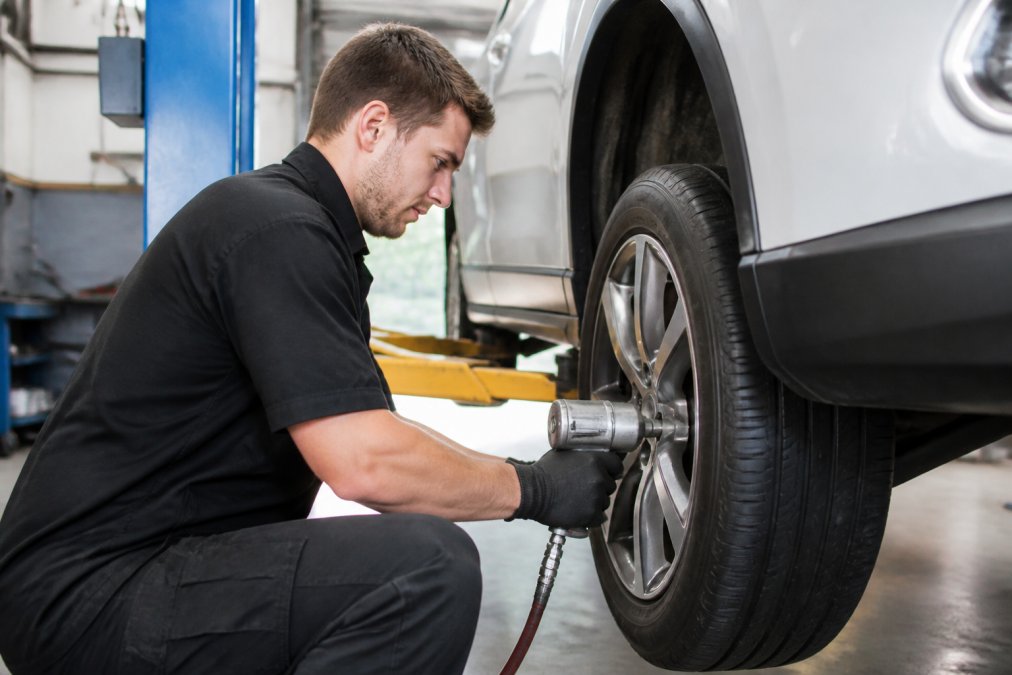
Firestone Service Network
Firestone operates through approximately 1,700 locations nationwide, including company-owned stores and franchised dealers. Installation turnaround varies significantly by location type and traffic volume. Company-owned Firestone Complete Auto Care centers typically handle tire installation as part of a broader service menu (brakes, alignments, oil changes), which means wait times can extend during peak hours. A standard four-tire replacement at a busy Firestone location may take 60-90 minutes, especially if alignment or balancing is needed. Technicians at Firestone locations are ASE-certified (Automotive Service Excellence), a nationally recognized credential that requires passing exams and maintaining continuing education. However, certification levels vary; not all technicians hold the same credentials, and franchise locations may have different training standards than corporate stores.
Firestone’s appointment system is online-accessible, and many locations offer same-day or next-day scheduling during off-peak seasons. During spring and fall (peak tire-replacement periods), appointment availability can drop to 5-7 days out. Their customer support operates through a centralized phone line and local store managers; response times average 24-48 hours for warranty claims or issues.
Midtown Tire Service Model
Midtown Tire operates a smaller regional footprint, typically concentrated in specific geographic areas. Their service model emphasizes streamlined installation: most locations handle tire sales and installation only, without the broader repair services that Firestone offers. This specialization means less wait time for tire work specifically, most Midtown locations complete four-tire installations in 30-45 minutes because technicians aren’t juggling alignment work, brake service, or other repairs. Technicians at Midtown locations are typically ASE-certified for tire and wheel service, though depth of certification varies by location.
Midtown’s appointment availability is often better than Firestone’s during peak seasons because their volume is lower and their service scope is narrower. However, their geographic availability is limited; if you don’t live near a Midtown location, this advantage disappears. Customer support is handled locally by store managers, which can mean faster response times for simple issues but inconsistent quality if a manager is unavailable.
Key Service Metrics to Compare
When evaluating service experience, ask these questions before booking:
Appointment availability: Can you get same-day or next-day service, or is it 5+ days out? Firestone’s larger network sometimes means longer waits; Midtown’s smaller footprint often means shorter waits if a location is nearby.
Technician credentials: Are technicians ASE-certified? Do they hold additional certifications in wheel balancing or alignment? Both chains employ certified technicians, but individual expertise varies.
Service scope: Does the location offer alignment, balancing, and rotation as part of installation, or do you need to schedule separately? Firestone’s full-service model means one-stop shopping but potentially longer waits. Midtown’s tire-only focus means faster installation but you may need to go elsewhere for alignment.
Warranty claim processing: If a tire fails prematurely, how long does the replacement take? Firestone’s national warranty system is centralized, which means consistency but potentially slower processing. Midtown’s local approach can be faster for simple claims.
Transportation options: Do you need to wait at the location, or can you drop off your vehicle? Firestone locations vary; some offer loaner cars or shuttle service, others don’t. Midtown locations typically don’t offer transportation services.
Real-World Service Timing
A typical four-tire replacement at Firestone includes: check-in (5 min), tire removal and inspection (15 min), mounting and balancing (20 min), installation (10 min), alignment check if needed (15-30 min), and checkout (5 min). Total: 70-90 minutes without alignment, 100-120 minutes with alignment.
At Midtown Tire, the same process without alignment typically takes 40-50 minutes because technicians are focused solely on tire work and aren’t managing other service bays. If you need alignment, you’ll be referred elsewhere, adding time and cost.
Service Quality Consistency
Firestone’s standardized training and corporate oversight mean consistent service quality across locations, though individual technician skill varies. Midtown’s smaller, more localized operation can mean higher personal attention but less consistency between locations.
The practical takeaway: if you value speed and have a Midtown location nearby, their service model is faster. If you need comprehensive service (alignment, balancing, rotation) in one visit, Firestone’s full-service model saves time despite longer waits. If appointment availability is critical, check both chains’ online scheduling systems for your specific location before deciding.
Signs You Need New Tires and When to Replace Them
You need new tires when tread depth drops below 2/32 of an inch. This is the legal minimum in most states, but safety experts recommend replacing tires at 4/32 of an inch, especially if you drive in wet conditions frequently. A simple penny test works: insert a penny into the tread with Lincoln’s head upside down. If you can see the top of his head, your tread is too shallow.
Visual signs of tire wear include uneven tread wear (wearing faster on the edges or center), cracks in the sidewall, or bulges indicating internal damage. Vibration while driving can signal alignment issues or internal tire damage, both warrant replacement.
Tires also age chemically. Even if tread depth is adequate, tires older than 10 years should be inspected by a professional. The rubber compound hardens over time, reducing grip and increasing the risk of blowouts.
Most drivers replace tires every 3-5 years depending on driving habits, climate, and tire quality. Firestone’s mileage warranties help predict replacement timing. Midtown Tire’s approach is more reactive, you replace them when they’re worn, not when a warranty expires.
Watch Out
Don’t ignore sidewall cracks or bulges. These indicate structural failure and create blowout risk. Replace the tire immediately, even if tread depth is adequate. Driving on a compromised tire is dangerous.
Don’t ignore sidewall cracks or bulges. These indicate structural failure and create blowout risk. Replace the tire immediately, even if tread depth is adequate. Driving on a compromised tire is dangerous.
Auto Repair Services in West Atlanta: Local Options and Advantages
Choosing a local repair shop for tire service offers advantages beyond just convenience. Local shops like TIPS Automotive know the roads in your area, the climate challenges (humidity, heat, potholes), and the specific vehicles that dominate the region. This local expertise translates to better recommendations for your situation.
Firestone’s national presence means consistency, you get the same service standards whether you visit a location in West Atlanta or elsewhere. However, national chains sometimes prioritize efficiency over personalization. You’re one customer in a high-volume system.
Midtown Tire’s regional focus means they understand local needs better than a national chain. But availability is limited, so you may have fewer location options.
Local shops like TIPS Automotive combine the personal touch with certified expertise. We specialize in serving West Atlanta drivers and understand the specific maintenance needs of vehicles in this area. Our same-day service means you’re not waiting days for an appointment, and our free pickup and drop-off service eliminates the need to arrange transportation.
For emissions testing, TIPS Automotive offers certified testing for 1996 and newer vehicles with wait times typically under 10 minutes. This service is integrated with tire replacement and other maintenance, so you handle multiple needs in one visit.
Total Cost of Ownership: Price, Warranty, and Long-Term Value
Total cost of ownership includes the tire purchase price, installation fees, warranty coverage, and expected replacement frequency. Firestone’s pricing varies widely depending on which product line you choose. Budget Firestone tires cost less upfront but may need replacement sooner. Premium Firestone tires cost more initially but often come with longer mileage warranties, reducing long-term replacement costs.
Midtown Tire’s pricing is typically competitive on mid-range options. Their value proposition centers on service convenience rather than premium tire engineering.
Which Option Wins for Your Driving Needs
Choose Firestone if you drive 15,000+ miles per year, want predictable replacement timing through mileage warranties, or need performance-oriented tires for responsive handling. Firestone’s engineering advantage shows in wet traction and dry handling, especially if you drive in rain frequently or want sporty performance.
Frequently Asked Questions
Are Firestone tires high quality?
Firestone tires are recognized for balanced performance in wet and dry conditions, with models like the Destination LE3 receiving strong ratings from independent testing organizations. Their TractionTech technology and full-depth sipes help maintain performance throughout the tire’s tread life. Quality varies by model, premium lines offer better durability and handling, while budget options prioritize affordability. Your specific needs and driving habits determine whether a Firestone tire is the right choice for your vehicle.
How do I know when it is time to replace my tires?
Replace your tires when tread depth reaches 4/32 inch or less, visible wear patterns appear uneven, sidewall damage or bulges are present, or you notice reduced traction in wet conditions. The penny test helps: insert a penny into the tread groove. If you see the top of Lincoln’s head, tread depth is too shallow. Most tires last 3 to 5 years depending on driving conditions, road hazard protection coverage, and maintenance habits like regular rotation and alignment checks.
What are the benefits of choosing a local auto repair shop over a national chain?
Local shops often provide personalized service and faster turnaround times. Many offer same-day service and convenient options like free pickup and drop-off. Local technicians frequently specialize in specific vehicle types and build long-term relationships with customers, prioritizing trust over upselling unnecessary work. They can address urgent repairs without the wait times common at larger chains. For West Atlanta residents, local shops eliminate the need to travel far for tire service and maintenance.
What should I look for when comparing tire service centers?
Evaluate installation time, wait periods, and appointment availability. Check whether technicians are certified and trained in proper tire mounting, balancing, and rotation. Review warranty coverage, road hazard protection options, and alignment services. Compare pricing transparency. Customer reviews revealing honesty and service quality matter significantly. Ask about free services like tire rotation and whether the shop handles emissions testing or other maintenance needs your vehicle requires.


Comments are closed