

Subtotal $0.00


Imagine you’re merging onto the Downtown Connector when your vehicle suddenly begins to shudder. It’s a common fear for local commuters, especially since Atlanta ranked as the 8th worst city for traffic in the country in 2026. You might worry that a major breakdown on I-75 is imminent or that a massive repair bill is headed your way. Dealing with car shaking when accelerating Atlanta is frustrating, but it’s important to know that this specific symptom often points to drivetrain or engine issues rather than just a pothole-damaged tire.
We want to give you back your peace of mind and help you understand exactly what’s happening under the hood. In this article, you’ll learn how to distinguish between a simple maintenance task and a genuine safety emergency. We’ll explore the most frequent causes of acceleration-based vibrations, from worn-out axles to engine misfires. By the end, you’ll know if your car is safe for your daily commute and how to find expert diagnostic help near Bolton Road to get your vehicle back to its smooth, reliable self.
Key Takeaways
- Learn how to tell the difference between a minor nuisance and a critical safety risk before you head out onto the Downtown Connector.
- Discover why your car shaking when accelerating Atlanta is often tied to drivetrain torque rather than a simple tire balance issue.
- Understand how local conditions like deep potholes on I-285 and extreme summer heat contribute to worn suspension components.
- Identify the specific symptoms of failing CV joints and motor mounts that only appear when your vehicle is under load.
- Learn how expert diagnostic services can save you money by pinpointing the exact cause of a shudder before it leads to a total breakdown.
Is it Safe to Drive When Your Car Shakes Under Acceleration?
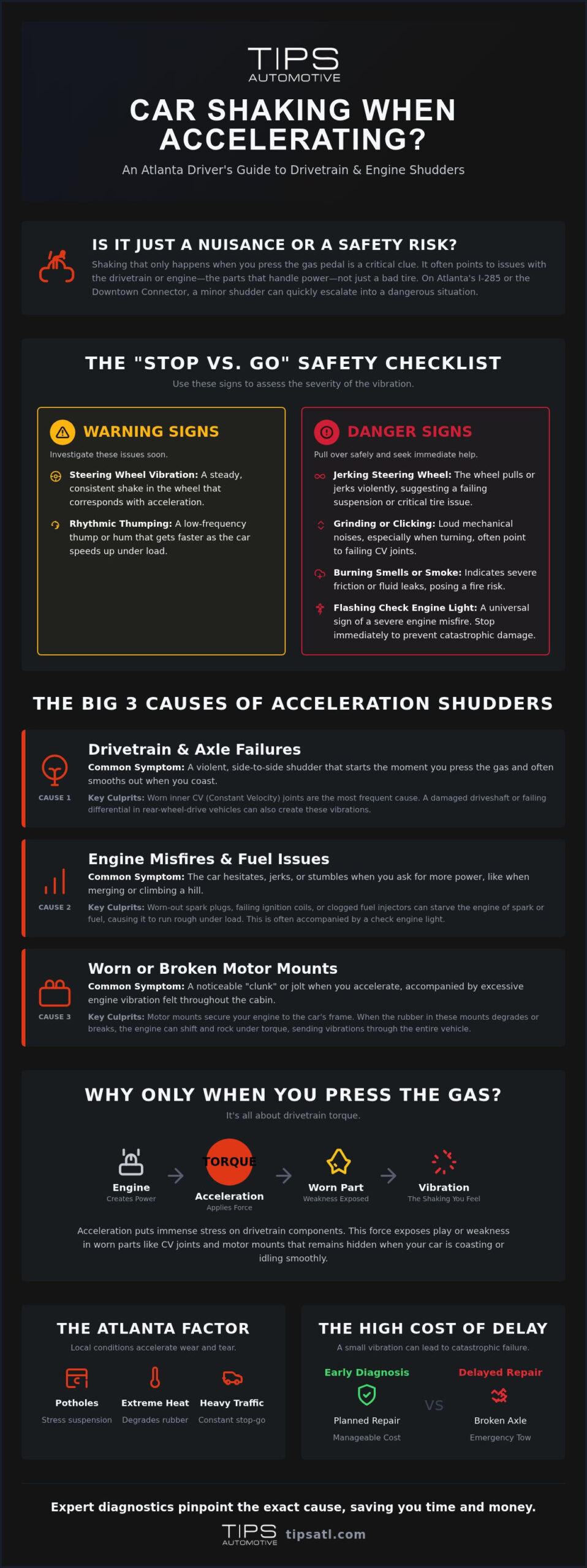
Driving in Atlanta requires a vehicle you can trust. When you experience car shaking when accelerating Atlanta, your first thought is usually safety. Some vibrations are just a nuisance, like a slightly out-of-balance tire. However, shaking that only occurs while you press the gas pedal is a different story. This usually indicates a problem with the parts of your car that handle power and movement, such as the engine or drivetrain.
Atlanta highway driving presents unique risks. If your car shudders while merging onto I-285, the danger increases with your speed. A mechanical failure at 65 mph is far more dangerous than one at a stoplight. Ignoring these shudders can lead to a total loss of control. If you see a flashing check engine light or hear loud, metallic clunking, pull over immediately. A flashing light often means a severe engine misfire that can destroy your catalytic converter in minutes.
The “Stop vs. Go” Vibration Safety Checklist
Assessing the severity of a vibration helps you decide your next move. Follow these markers to evaluate your vehicle’s condition:
- Steering wheel behavior: Does the wheel just vibrate, or does it jerk? A jerking wheel suggests a failing suspension component or a serious tire issue that requires immediate attention.
- Noise markers: Listen for grinding, clicking, or rhythmic thumping. Clicking during turns often points to failing CV joints, while grinding suggests internal mechanical wear.
- Sensory cues: Watch for smoke or smells like burning rubber. These are signs of extreme friction or fluid leaks hitting hot engine parts, which can lead to fires.
Long-Term Risks of Delayed Repairs
Small issues rarely stay small. A worn CV joint can eventually snap, leaving you stranded with a broken axle. Vibrations also create a ripple effect through the entire vehicle. Excessive shaking puts constant stress on engine mounts and the transmission. In rear-wheel-drive vehicles, an unbalanced Driveshaft can vibrate so much that it damages the transmission seals and bearings.
Addressing the issue early through a professional diagnostic service is always the better choice. It’s the difference between a planned repair and the high cost of an emergency tow. Catching these problems before they escalate ensures your vehicle remains reliable for the long haul and keeps your repair costs manageable.
The Big 3: Common Causes of Acceleration Shudders
Many drivers assume a shaky ride simply means their tires are out of balance. While tire issues certainly cause vibrations, they usually occur at specific speeds regardless of whether you are coasting or speeding up. If you experience car shaking when accelerating Atlanta, the problem is likely deeper than a simple wheel weight. This “under load” vibration typically stems from the mechanical components that transfer power from your engine to the road. When these parts are stressed by torque, they reveal weaknesses that remain hidden during a smooth cruise.
Your transmission health also plays a major role in how smoothly your car handles the daily Atlanta commute. Internal transmission issues or low fluid levels can cause the vehicle to shudder as it tries to find the right gear. This hesitation often feels like a mechanical tremble that disappears once the car reaches a steady speed. Identifying whether the shake is coming from the engine, the drivetrain, or the mounts is the first step toward a reliable fix.
Drivetrain and Axle Failures
Worn inner CV joints are the most frequent cause of shaking that occurs specifically during gas pedal application. These joints sit at the ends of your axles; when they wear out, they develop “play” that creates a violent shudder under torque. Diagnosing driveline vibrations requires a methodical approach because the symptoms can mimic other mechanical failures. In rear-wheel-drive vehicles, a damaged driveshaft or a failing differential can also cause rhythmic vibrations that intensify as your RPMs climb. These components are under the most stress when you are trying to gain speed, making them prime suspects for acceleration-only issues.
Engine Misfires and Fuel Delivery
Sometimes the shake isn’t in the wheels or axles; it’s a “stumble” within the engine itself. Worn spark plugs often cause the engine to misfire when you demand more power, which feels like a vibration or a series of jerks. If an ignition coil fails, the engine might run smoothly at idle but struggle and shake when you press the gas to merge onto the highway. Clogged fuel injectors can also starve the engine of the fuel it needs for acceleration, leading to a hesitant, shaky response. If your dashboard shows a check engine light diagnosis Atlanta along with the vibration, an engine diagnostic is the best way to isolate the problem. If you also notice your engine shaking at a standstill or stalling at red lights, a professional rough idle diagnosis in Atlanta can help determine whether the same underlying fuel or ignition issue is responsible for both symptoms.
Motor Mounts and Chassis Stability
Your engine and transmission are held in place by heavy-duty mounts designed to absorb vibrations. If a motor mount breaks, the engine can physically shift when you accelerate, creating a noticeable “thud” followed by a steady vibration. Transmission mounts work similarly. When they fail, you’ll feel a significant tremble that often settles down once you reach a steady cruising speed and the torque load decreases. Replacing these rubber and metal components restores the quiet, stable feel of your vehicle and prevents the engine from moving enough to damage surrounding parts.
Why the Vibration Only Happens When You Press the Gas
Accelerating puts your car’s mechanical system under intense pressure. This force is called torque. It’s why your car might feel perfectly smooth while coasting down a hill but start to act up the moment you touch the gas. If you’re experiencing car shaking when accelerating Atlanta, you’re likely dealing with a “load-sensitive” vibration. These issues only appear when the engine is working hard to move the vehicle forward. When you coast, the pressure on the drivetrain is released, which allows the vibration to temporarily disappear.
You can use the gas pedal as a helpful diagnostic tool. Pay attention to exactly when the shuddering starts and stops. If the vibration disappears the second you lift your foot off the accelerator, you’ve successfully ruled out tire balance or warped brake rotors. Those problems are “speed-sensitive” and won’t care if you’re on the gas or not. A load-sensitive shake points your mechanic directly toward the components that handle engine power, such as the axles, mounts, or internal transmission parts.
The Role of Internal CV Joints
While outer CV joints usually click during turns, the internal “tripod” joints are responsible for that unsettling side-to-side wobble during acceleration. These joints allow the axle to move up and down with the suspension while still spinning. Over time, the internal rollers can wear grooves into the housing. When you apply torque, the rollers get stuck in these grooves, forcing the entire axle to oscillate. This creates a rhythmic shake that vibrates the whole cabin. You might find visual evidence under the car by checking the rubber boots. If they’re torn and leaking dark, thick grease, the joint has likely lost its lubrication and started to fail.
Torque Converter and Transmission Shudder
Another common culprit is the torque converter lock-up clutch. This can create a sensation often described as “driving over a rumble strip.” It typically happens at specific speeds when the transmission is trying to shift into a higher gear for better fuel economy. Unlike a single “kick” or hard shift, this is a continuous, high-frequency vibration that lasts for several seconds. Degraded transmission fluid is frequently the cause. As fluid ages, it loses the ability to provide the necessary friction for the clutch to grab smoothly. Staying current with your vehicle maintenance is the best way to keep these internal components working without a hitch.
Diagnosing Vibrations in Atlanta: Potholes, Heat, and Traffic
Atlanta drivers face unique environmental stressors that turn minor mechanical issues into major headaches. Dealing with car shaking when accelerating Atlanta isn’t just about the car; it’s about the roads you drive every day. Between the constant stop-and-go congestion on I-75 and the infamous potholes on the Perimeter, your vehicle’s drivetrain and suspension take a beating. The repetitive stress of accelerating from a standstill in heavy traffic puts immense pressure on your CV joints. This constant load and release cycle causes internal components to wear out much faster than they would in a less congested city.
A smooth ride is essential for a stress-free trip past the Mercedes-Benz Stadium or through Midtown. When your car shudders every time the light turns green, it adds unnecessary anxiety to an already long commute. Our city’s infrastructure and climate play a direct role in how your vehicle performs under load. Understanding these local factors helps you identify whether your vibration is a simple maintenance issue or damage caused by the environment.
Atlanta Road Damage and Alignment
One significant impact from a pothole on I-285 can do more than just rattle your teeth. It can bend a rim or immediately throw off your vehicle’s alignment. In early 2026, Atlanta’s 311 system recorded 847 pothole reports in just seven months. Nationally, the average cost for a vehicle repair caused by pothole damage is approximately $600. When your suspension is compromised, it struggles to manage the torque of acceleration, leading to a shaky, unstable ride. An alignment check is often the most practical first step for any local driver noticing a new vibration after hitting a rough patch of road.
Heat-Related Component Failure
When road damage extends beyond mechanical issues to affect the body or frame of the vehicle, it is important to understand the standards of professional restoration; at NW Houston Auto Repair and Collision, you can read more about the precision required for high-quality collision and paint repair.
Georgia’s intense summer heat and humidity are equally tough on your vehicle. Rubber components like motor mounts and suspension bushings dry out and crack faster in our climate. When these mounts fail, they lose their ability to dampen engine movement. This makes any car shaking when accelerating Atlanta feel much more violent because the engine is physically shifting under the hood. High temperatures also affect the viscosity of your transmission fluid. If the fluid thins out too much, it can cause internal clutches to slip or chatter, creating a rhythmic shudder during acceleration.
Regular vehicle maintenance is the best defense against these local factors. Keeping your fluids fresh and your chassis lubricated helps prevent the kind of summer breakdown that leaves you stranded during a 31.2-minute commute through the city. If you’re tired of the shuddering, our team near Bolton Road can perform a thorough suspension and alignment inspection to pinpoint the damage and restore your peace of mind.
How TIPS Automotive Solves Complex Shaking Issues in Atlanta
TIPS Automotive has served the Bolton Road and NW Atlanta community since 2001. We understand that car shaking when accelerating Atlanta isn’t just a technical problem; it’s a disruption to your daily life and a source of anxiety during your commute. Our team specializes in the complex mechanical diagnostics required to isolate these specific vibrations. We don’t rely on guesswork. Instead, we use a methodical approach to ensure your vehicle is safe and reliable. Our shop functions as a dependable pillar of the local community, offering the professional authority you need and the neighborly warmth you expect.
We use specialized tools for engine, transmission, and suspension analysis to find the root cause of your vehicle’s shudder. Whether the issue is a failing inner CV joint or a torque converter problem, we provide clear and practical advice. We aim to give you peace of mind by focusing on the functional longevity of your vehicle. You can trust us for honest, utilitarian repair plans that prioritize your safety without high-pressure sales tactics.
Our Professional Diagnostic Process
For vehicle owners who value a combination of high-end mechanical expertise and aesthetic maintenance, MonacoPro Auto Garage serves as a prime example of a specialized service center dedicated to total vehicle health and performance.
Isolating a vibration that only happens under load requires a structured plan. We follow these four steps to get you back on the road safely:
- Step 1: Symptom Replication. We begin with a professional test drive to feel the specific vibration. This helps us confirm if the shake is load-sensitive or speed-sensitive.
- Step 2: Under-Car Inspection. Our technicians perform a thorough physical check of the axles, motor mounts, and suspension components. We look for torn grease boots, cracked rubber, and signs of impact damage from Atlanta potholes.
- Step 3: Systems Scanning. We use advanced diagnostic computers to check for “Check Engine Light” codes or hidden transmission faults. This identifies engine misfires or fuel delivery issues that might feel like a mechanical shake. If your amber warning light is on alongside the vibration, our check engine light diagnosis in Atlanta goes far beyond a simple code scan to uncover the true root cause.
- Step 4: Prioritized Repair Plan. We provide a straightforward report that ranks repairs by safety and urgency. This helps you make an informed decision about your vehicle’s maintenance.
Beyond the Shake: Full-Service Care
While we are experts in complex diagnostics, we also provide comprehensive vehicle maintenance to keep your car running smoothly. You can combine your vibration repair with routine services like an oil change or an air filter replacement. We also offer expert brake replacement, alignment, and suspension work to restore your car’s original ride quality. Our goal is the restoration of your vehicle’s efficiency and safety so you can drive with confidence.
Schedule your diagnostic at TIPS Automotive today and let our seasoned experts identify the cause of your vehicle’s shaking. We’re here to help our NW Atlanta neighbors stay safe on the road.
Get Back to a Smooth Atlanta Commute
Dealing with car shaking when accelerating Atlanta doesn’t have to be a source of constant stress. You now understand that these vibrations often point to specific drivetrain or engine components under load rather than just a simple tire issue. By paying attention to when the shuddering happens and identifying local stressors like I-285 potholes or Georgia heat, you’ve already taken the first step toward a safer vehicle. Identifying these symptoms early prevents small mechanical failures from turning into expensive emergency repairs later.
TIPS Automotive has functioned as a reliable pillar of the local community since 2001. Our expert mechanical and diagnostic specialists utilize specialized tools to isolate complex vibrations and provide clear, utilitarian advice. We are conveniently located near Bolton Road and always prioritize the functional longevity of your vehicle over high-pressure sales. Book Your Vibration Diagnostic at TIPS Automotive today to restore your peace of mind and get back to a smooth, reliable ride. We look forward to helping you drive with confidence through our city again.
Frequently Asked Questions
Is a car shaking when accelerating a sign of a bad transmission?
Shaking under acceleration can definitely indicate a transmission issue, particularly a failing torque converter lock-up clutch. This sensation often feels like driving over a rumble strip. While drivetrain parts like axles are more common culprits, internal transmission wear or low fluid levels can cause similar shudders. Our team near Bolton Road uses specialized diagnostic tools to determine if the vibration is coming from your transmission or another mechanical component.
Can unbalanced tires cause shaking only when accelerating?
Unbalanced tires typically cause vibrations at specific speeds, regardless of whether you are pressing the gas or coasting. If your vehicle only experiences car shaking when accelerating Atlanta, the problem is almost certainly related to the drivetrain or engine load. Tires that are out of balance will continue to shake as long as you maintain a certain speed. Shaking that stops when you lift off the pedal points toward axles or mounts.
How much does it cost to fix a car that shakes when accelerating in Atlanta?
The cost of your repair depends entirely on the root cause and the specific parts required for your vehicle. A simple spark plug replacement is much less intensive than a full transmission repair or axle replacement. Labor rates in the city vary between independent shops and dealerships, but addressing the issue early prevents the need for emergency towing. We provide a clear, prioritized repair plan after our diagnostic to help you manage your budget.
What does it mean if my steering wheel shakes when I speed up?
A steering wheel that shakes during acceleration usually indicates an issue with the front drivetrain or suspension components. Worn inner CV joints are a frequent cause because they force the axle to wobble when under torque. This wobble is transferred through the chassis and into your hands. If the shaking only happens when you hit the gas, it’s a load-sensitive issue that requires a professional under-car inspection to ensure your safety on the road.
Can bad spark plugs cause my car to vibrate under load?
Bad spark plugs are a very common cause of engine vibrations that occur specifically under load. When you accelerate, the engine requires a stronger spark to ignite the fuel-air mixture. If a plug is worn or fouled, the engine may misfire, which feels like a stumble or a rhythmic shake. This often triggers a check engine light. Replacing worn plugs is a standard part of vehicle maintenance that restores smooth engine performance and fuel efficiency.
Is it okay to drive with a worn CV joint for a few days?
Driving with a worn CV joint is a significant safety risk that could leave you stranded on a busy highway like I-75. While a joint might only click or vibrate at first, it can eventually snap or seize entirely. This leads to a total loss of power to the wheels. It’s best to have the joint inspected and replaced as soon as you notice the symptoms to avoid a much more expensive roadside emergency or loss of control.
Why does my car shake at 60 mph but not at lower speeds?
Shaking that only occurs at high speeds like 60 mph is usually a speed-sensitive vibration rather than a load-sensitive one. This is often caused by tires that are out of balance or a wheel alignment that has been knocked out by a deep pothole. At these speeds, the rotating mass of the tire hits a resonant frequency that amplifies any small imbalance. A professional alignment and tire balance check is the most effective way to solve this issue.
How long does a vibration diagnostic take at TIPS Automotive?
A comprehensive vibration diagnostic at our shop typically takes a few hours to complete thoroughly. We begin with a test drive to replicate the car shaking when accelerating Atlanta and then move to a detailed mechanical inspection. Our technicians check the axles, motor mounts, and suspension before using computerized tools to scan for engine or transmission faults. This methodical process ensures we identify the exact cause before suggesting any repairs for your vehicle.

