

Subtotal $0.00


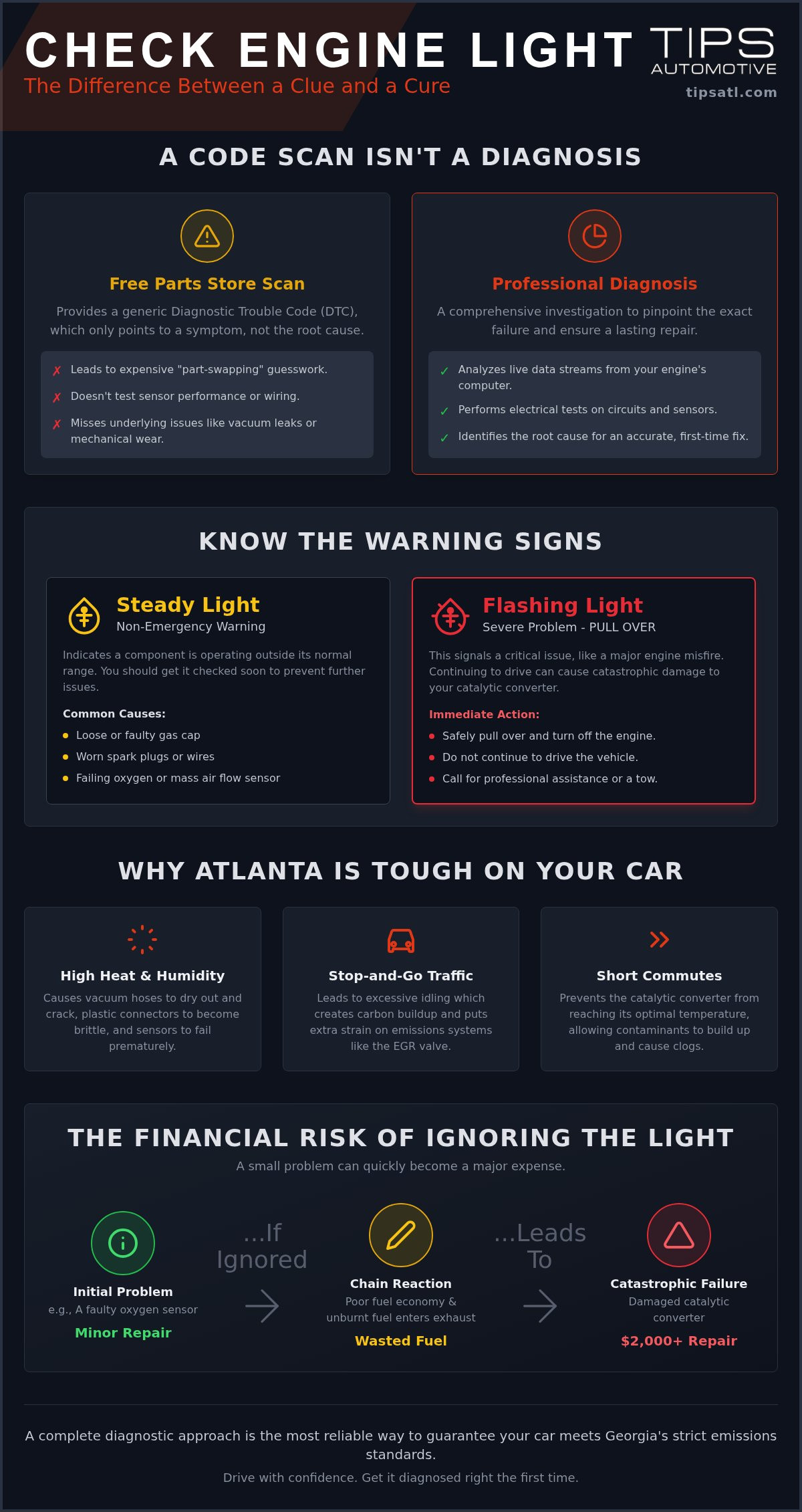
That free code scan from a big-box parts store isn’t actually a diagnosis; it’s just a clue that often leads to expensive, unnecessary part-swapping. We understand the sinking feeling that hits when that amber glow appears on your dashboard during a busy commute on the Downtown Connector. It’s natural to feel anxious about your car’s reliability or worry about being overcharged for repairs you might not even need. You want to know your vehicle is safe and ready to pass its next Georgia emissions test without any stressful surprises.
You deserve a clear explanation and a fix that lasts. In this article, you’ll discover exactly how a professional check engine light diagnosis in Atlanta works and why a simple code scan is only the first step toward a dependable repair. We’ll pull back the curtain on what our expert technicians look for, from sensor electrical signals to mechanical wear. You’ll gain a better understanding of the diagnostic process, giving you the confidence that your car will be handled right the first time so you can get back on the road with total peace of mind.
Key Takeaways
- Professional check engine light diagnosis Atlanta is a deep-dive investigation that identifies root causes, preventing the expensive guesswork of basic code scans.
- Frequent stop-and-go traffic in the metro area puts extra strain on emissions components, making thorough inspections essential for vehicle longevity.
- Expert technicians use live data streams to watch your engine’s performance in real time, ensuring every sensor is reporting accurate information.
- Recognizing the difference between a steady light and a flashing emergency signal can save you from costly engine repairs and keep you safe on the road.
- A complete diagnostic approach is the most reliable way to guarantee your car meets Georgia’s strict emissions standards for yearly registration.
Understanding the Check Engine Light in Atlanta Traffic
The amber glow of a dashboard warning usually happens at the worst possible time, like when you’re merged into a heavy crawl on I-285. In our city, a check engine light isn’t just a suggestion; it’s a response to some of the most demanding driving conditions in the country. The On-Board Diagnostics (OBD-II) system functions as your vehicle’s internal health monitor. This system constantly tracks emissions and engine performance to ensure everything operates within safe limits. When it detects a deviation from standard operating parameters, it triggers the light to alert you before a small glitch becomes a roadside breakdown. Seeking a professional check engine light diagnosis in Atlanta is the most reliable way to understand exactly what your car is trying to tell you.
Why Atlanta’s Climate and Commute Matter
Atlanta’s unique environment plays a significant role in vehicle wear. Our high humidity and intense summer heat often cause plastic connectors to become brittle and electrical sensors to fail prematurely. Stop-and-go traffic leads to excessive idling, which creates carbon buildup in your engine and puts extra stress on the Exhaust Gas Recirculation (EGR) system. Short commutes are equally tough because they don’t allow the catalytic converter to reach its optimal operating temperature. This prevents the system from burning off contaminants, which can lead to clogging and eventual failure. These local factors mean your engine works harder than a car driven mostly on open highways.
The Financial Risk of Procrastination
Ignoring that light often leads to much higher costs at the pump and the repair shop. A faulty oxygen sensor might be a simple fix, but if you leave it unaddressed, it can cause your engine to run “rich,” which means it’s burning too much gasoline. This excess fuel eventually dumps into the catalytic converter and melts the internal components. What could have been a minor sensor replacement quickly turns into a repair costing $2,000 or more. Beyond mechanical damage, a malfunctioning system can significantly reduce your fuel economy, costing you more every time you visit the gas station. Staying proactive with a check engine light diagnosis in Atlanta ensures your vehicle remains reliable and ready to pass Georgia emissions testing. Common issues we see include:
- Worn Spark Plugs: These cause engine misfires and poor acceleration.
- Loose Gas Caps: A simple seal issue that allows fuel vapors to escape.
- Mass Air Flow Sensor Failure: This prevents the engine from calculating the correct fuel-to-air ratio.
- Vacuum Leaks: Often caused by hoses drying out in the Georgia heat.
Addressing these symptoms early protects your engine’s longevity and prevents the stress of a failed emissions test. We focus on identifying the root cause so you can drive with confidence throughout the metro area.
Diagnostic Scanning vs. Professional Troubleshooting
Getting a free code scan at a local parts store is a common first step for many drivers. While it feels like a shortcut, there’s a significant difference between reading a code and performing a full check engine light diagnosis in Atlanta. A code reader is like a compass; it shows you the general direction of the problem but doesn’t provide the map to the specific solution. Diagnostic Trouble Codes (DTCs) are simply indicators that a specific system is operating outside its normal range. They don’t tell the technician which part failed, only that a certain circuit or sensor is reporting an error.
If you rely solely on the code, you might fall into the trap of part swapping. This involves replacing components based on the code’s name until the light finally stays off. It’s a costly and frustrating way to maintain a vehicle. Understanding the common causes for a check engine light is helpful for context, but professional troubleshooting confirms the exact failure point before any parts are ordered. Our shop uses high-end equipment that offers bidirectional controls, allowing us to command specific components to operate and verify their function in real time.
What a Code Really Means
A code for a “lean” condition doesn’t automatically mean you need a new oxygen sensor. It’s often a symptom of a cracked vacuum hose, a clogged fuel injector, or a failing gasket. When we see a “Circuit High” or “Circuit Low” code, we know the computer isn’t seeing the correct voltage. This could be a broken wire, a corroded ground, or a blown fuse rather than a dead sensor. Professional tools allow us to view “Freeze Frame Data,” which captures the engine’s exact conditions, such as RPM and temperature, at the moment the fault occurred. This data is vital for replicating intermittent issues that only happen under specific driving conditions, including engine stumbles and rough idle symptoms that require professional diagnosis in Atlanta.
The Value of Professional Labor
Real diagnostic work involves more than just plugging in a tool. It requires a methodical approach and specialized equipment that consumer-grade Bluetooth scanners simply don’t have. Our technicians use multi-meters to test electrical integrity and smoke machines to find invisible air leaks in the intake or EVAP systems. This thoroughness ensures we address the root cause rather than just clearing a symptom. If you’re tired of the guesswork, our Diagnostic Services provide the clarity you need for a lasting repair. We focus on getting it right the first time so you don’t have to deal with the same light returning a week later.
The TIPS Automotive Diagnostic Process: What We Inspect
A thorough check engine light diagnosis in Atlanta requires more than just a quick look under the hood. At TIPS Automotive, we follow a methodical five-step process to ensure we find the actual cause of your vehicle’s trouble. We treat every car with the same attention to detail we would give our own. Our goal is to provide you with a clear, honest assessment so you can make informed decisions about your vehicle’s care. This structured approach eliminates guesswork and focuses on long-term reliability.
- Step 1: Initial computer interrogation. We perform a system-wide health scan. This looks at every computer module in your car, not just the one that triggered the light.
- Step 2: Analysis of real-time sensor data. We monitor the “Live Data Stream” while the engine is running. This allows us to see how sensors are performing in real-world conditions.
- Step 3: Targeted physical inspection. Once the computer points us in a direction, we manually inspect the suspected system for visible signs of wear, such as cracked hoses or frayed wires.
- Step 4: Component-level testing. We use specialized tools to perform precision tests. This includes checking volts and ohms with a multi-meter or using gauges for fuel and vacuum pressure tests.
- Step 5: Verification of the fix. After the repair, we perform a specialized drive cycle. This ensures all readiness monitors are set and the light stays off for good.
Common Systems We Evaluate
Our technicians take a deep dive into the systems most likely to trigger a warning. For the fuel delivery system, we check fuel pressure and injector spray patterns to ensure the engine isn’t starving or flooding. When inspecting the ignition system, we look for carbon tracking on spark plugs or weak output from ignition coils. The emissions and EVAP systems are also high priorities. We test for tiny vacuum leaks and canister issues that often cause a vehicle to fail its yearly inspection. These systems are vital for maintaining both performance and environmental compliance, and for those who need to source high-quality mechanical components, you can visit Ozi Auto Parts to find specialized parts for your car’s long-term health.
Advanced Engine & Transmission Diagnostics
Sometimes the issue is deeper than a simple sensor. We have the expertise to perform advanced Engine Repair and transmission diagnostics. This includes testing transmission solenoids to ensure smooth shifting and internal engine health checks like compression and leak-down tests. We also look for “Ghost Codes.” These are false errors caused by faulty wiring or poor ground connections rather than a broken part. By identifying these complex electrical issues, we prevent you from paying for expensive components you don’t actually need. Our experience helps us spot these subtle problems that less thorough shops might miss.
Flashing vs. Solid Lights: Immediate Steps for Drivers
Understanding the difference between a steady light and a blinking one is essential for your safety and your wallet. A solid light is your car’s way of saying it has detected an issue that needs attention soon, but it’s generally safe to finish your current trip. A flashing light is a different story entirely. This indicates a severe engine misfire that is actively damaging your vehicle. If you see this, you should pull over as soon as it’s safe to do so. Scheduling a professional check engine light diagnosis in Atlanta immediately is the only way to prevent catastrophic engine failure.
When the light flashes, it often means unburned fuel is entering the exhaust system. This fuel ignites inside the catalytic converter, which can cause the internal ceramic structure to overheat and melt in just a few minutes. Replacing a catalytic converter is a major expense that can often be avoided by reacting quickly to the warning signal. If your vehicle loses power or begins to stumble while you’re on the highway, stay calm, signal early, and move to the shoulder. It’s never worth risking your safety or a total engine seizure by trying to “limp” the car to your destination. Drivers who also notice their engine shaking or bouncing RPMs at a standstill should seek a rough idle diagnosis in Atlanta to address the air, fuel, or spark imbalance before it worsens.
When to Tow vs. When to Drive
Sometimes the solution is simpler than you think. A loose or damaged gas cap can trigger the light by allowing fuel vapors to escape the tank. Before you head to the shop, make sure your cap is tightened until it clicks. You should also check your oil and coolant levels. Low fluids can cause the computer to trigger a warning to protect the engine from overheating or friction damage. A solid light is a polite request for a checkup, while a flashing light is an urgent command to stop before the damage becomes permanent. If your car is showing these symptoms, our team is ready to provide a thorough check engine light diagnosis in Atlanta to get you back on the road safely.
Reliable Engine Diagnostics at TIPS Automotive
At TIPS Automotive, we believe in a no-guesswork approach to every vehicle that enters our shop. Providing a reliable check engine light diagnosis in Atlanta means more than just clearing a code; it’s about building a relationship based on trust and technical accuracy. We understand that your car is a vital part of your daily life. Our goal is to provide a service that is both professional and neighborly, ensuring you feel confident in the safety of your vehicle. You’ll always receive a thorough explanation of our findings before we begin any work.
Our technicians have been serving the local community since 2001. This 25 year history allows us to recognize patterns in engine behavior that a computer screen alone might miss. We combine this seasoned intuition with the latest diagnostic interfaces to service everything from modern imports to domestic workhorses. Clear communication is the cornerstone of our service. Before we turn a single wrench for a repair, we sit down with you to explain the “why” behind our findings. This transparency ensures you aren’t just paying for a fix, but investing in your car’s long-term health.
Integrating a professional check engine light diagnosis in Atlanta into your regular Vehicle Maintenance schedule helps prevent the emergency scenarios we’ve discussed. We focus on the functional longevity of your vehicle rather than just providing a quick reset. By catching small sensor deviations early, we can help you avoid the high costs of major engine or transmission failures down the road. Our commitment is to keep your car running efficiently through every Atlanta commute.
Why Choose an Independent Atlanta Shop?
Unlike high-volume national chains, we provide personalized attention to every driver. We aren’t rushing through a quota, and we take the time to answer your questions without using confusing technical jargon. We have extensive expertise across all makes and models, including complex European systems and domestic trucks. Our location in NW Atlanta near the Bolton Road area makes us a convenient and accessible stop for local residents. We value the loyalty of our customers and strive to be a dependable pillar of the local community.
Ready to Clear Your Dashboard?
When you arrive for your first diagnostic appointment, you’ll find an environment that is professional and organized. We’ll perform a comprehensive interrogation of your vehicle’s systems and provide a detailed, easy-to-understand report. Our shop operates on a steady Monday through Friday schedule to support the needs of busy professionals and local commuters. We focus on getting the job done right the first time so you can get back to your routine without worry. Schedule your professional diagnostic service at TIPS Automotive today.
Drive with Confidence on the Atlanta Commute
Your dashboard should be a source of information, not a cause for anxiety. We’ve explored how Atlanta’s heavy traffic and high humidity strain your vehicle’s emissions system, but you don’t have to face these technical challenges alone. Choosing a professional check engine light diagnosis in Atlanta ensures that you aren’t just clearing a temporary code; you’re solving the root cause of the problem. Our team at TIPS Automotive has served the local community from our Bolton Road area location since 2001. We specialize in the complex engine diagnostics that high-volume national chains often overlook.
You deserve the peace of mind that comes from knowing your car is reliable and ready for its next Georgia emissions test. Whether you’re dealing with a steady warning light or a more urgent flashing signal, our experienced technicians provide clear answers without the jargon. We focus on the long-term health of your vehicle so you can stay focused on the road ahead. Our Monday through Friday schedule is designed to support busy commuters who need dependable service they can trust.
Book Your Expert Check Engine Light Diagnosis at TIPS Automotive
We look forward to helping you keep your vehicle safe and efficient for years to come.
Frequently Asked Questions
How much does a check engine light diagnosis cost in Atlanta?
Professional diagnostic fees vary depending on the complexity of the vehicle’s electrical system and the depth of the testing required. While some shops offer basic code scans for free, a comprehensive check engine light diagnosis in Atlanta involves specialized labor and advanced equipment. This fee typically covers the technician’s time to perform electrical testing, smoke tests, or mechanical inspections that go beyond simply reading a computer code. We focus on providing an accurate assessment to save you money on parts.
Can I pass a Georgia emissions test if my check engine light is on?
You cannot pass the Georgia emissions inspection if your check engine light is illuminated. The state’s testing equipment communicates directly with your vehicle’s computer; any active fault codes related to emissions will result in an automatic failure. It’s important to have the underlying issue resolved and the system’s “readiness monitors” set before you visit a testing station. This ensures your vehicle is fully compliant and ready for its yearly registration without any unexpected delays.
Will the check engine light reset itself after a repair?
Most modern vehicles require a specific drive cycle or a manual reset using a scan tool to clear the light after a repair is completed. Even if the part is replaced, the computer often stores the “permanent” code until it verifies the fix through several miles of varied driving. Our technicians perform a specialized drive cycle as part of our process to ensure the light stays off and the system is fully restored before you leave the shop.
Why did my check engine light come on and then go off?
An intermittent light usually indicates a “pending” fault that only occurs under specific driving conditions, such as high speeds or cold starts. This often happens when a sensor is beginning to fail or a connection is slightly loose. Even if the light is currently off, the computer usually stores a history code that allows us to perform a check engine light diagnosis in Atlanta. We can find the root cause before it becomes a permanent, more expensive failure.
Is it safe to drive my car to Atlanta if the check engine light is on?
It is generally safe to drive short distances with a solid light, but you should avoid heavy acceleration or towing. You should monitor your gauges closely for signs of overheating or low oil pressure while driving. If the light begins to flash, you must stop immediately to prevent severe damage. Driving long distances with a known fault can lead to decreased fuel efficiency and increased wear on expensive components like the catalytic converter.
Does a check engine light always mean a major engine repair is needed?
Many dashboard warnings are triggered by minor issues like a loose gas cap, a dirty sensor, or a small vacuum leak. While these aren’t major engine failures, they still require professional attention to keep the vehicle running efficiently. A thorough diagnostic process separates these simple fixes from more complex mechanical problems. Addressing these small issues early is the best way to prevent them from turning into a costly engine repair later in the vehicle’s life.
How long does a professional diagnostic service take?
A standard diagnostic appointment typically takes between one and two hours to complete thoroughly. This timeframe allows our technicians to perform a system-wide scan, analyze live data, and conduct physical inspections of the suspected components. Some complex electrical or intermittent issues may require additional time for testing wires or performing a road test. We focus on accuracy rather than rushing, ensuring we identify the correct fix the first time you visit our shop.

