

Subtotal $0.00


Table of Contents
- Why Managing Car Repairs Matters More Than You Think
- Understanding Your Vehicle’s Maintenance Schedule
- How to Budget for Car Repairs and Avoid Financial Surprises
- Building a Preventative Maintenance Checklist That Works
- Finding and Vetting a Trustworthy Mechanic
- Navigating Repair Estimates and Getting Fair Quotes
- The Difference Between Synthetic and Conventional Oil
- DIY Maintenance Tasks vs. Professional Repairs
- Reading Dashboard Warning Lights and Taking Action
- Keeping Digital Records of Your Vehicle’s Repair History
- Understanding Warranty Coverage and Repair Protection
- Reducing Labor Costs Without Sacrificing Quality
- Emergency Roadside Repair Kits and What to Keep in Your Vehicle
- Common Repair Mistakes and How to Avoid Them
- Frequently Asked Questions
Last Updated: September 21, 2026
Why Managing Car Repairs Matters More Than You Think
To manage car repairs effectively isn’t just about fixing what breaks. It’s about taking control of one of your biggest household expenses before it controls you. Most vehicle owners react to problems instead of planning for them, which means they end up overpaying, dealing with unnecessary stress, and often getting talked into work they don’t actually need.
When you understand your vehicle’s needs, know what fair pricing looks like, and build a relationship with a mechanic you trust, repair costs become predictable rather than shocking. This guide walks you through the exact strategies that separate savvy owners from those who get blindsided by unexpected bills.
The stakes are real. A single major repair, transmission work, engine trouble, or suspension damage, can cost thousands. But most of those catastrophic failures are preventable. The difference between a $500 repair and a $5,000 one often comes down to whether you caught a problem early through preventative maintenance or ignored warning signs until something critical failed.
Understanding Your Vehicle’s Maintenance Schedule
Your vehicle’s maintenance schedule is the roadmap to avoiding expensive surprises. It tells you exactly what needs attention and when, based on miles driven and time elapsed. Ignoring this schedule is like skipping doctor checkups and hoping nothing goes wrong.
Every vehicle manufacturer publishes a recommended service interval in the owner’s manual. This isn’t marketing, it’s engineering. The schedule reflects what the engineers learned about how long specific components actually last under normal driving conditions. Oil changes, fluid flushes, filter replacements, and inspections are timed to catch wear before it becomes failure.
The schedule typically divides maintenance into two categories: minor services and major services. Minor services happen every 5,000 to 10,000 miles and usually include oil and filter changes plus a basic inspection. Major services occur at longer intervals, often 30,000, 60,000, or 100,000 miles, and involve more comprehensive work like transmission fluid checks, coolant flushes, and brake system inspections.
Your driving habits affect how strictly you need to follow the schedule. Frequent short trips, towing, or driving in extreme heat or cold may require more frequent service intervals. The owner’s manual usually includes a “severe driving” schedule for these conditions. Ignoring this adjustment and sticking to the standard schedule in harsh conditions is one of the most common ways owners end up with premature wear.
Digital tools make tracking easier than ever. Many vehicles now sync maintenance reminders to your phone. If your vehicle doesn’t, set calendar alerts based on your odometer reading.
Pro Tip
Check your manufacturer’s schedule before choosing a mechanic. Some shops try to upsell services that aren’t due yet. Knowing what’s actually required protects you from unnecessary work.
Check your manufacturer’s schedule before choosing a mechanic. Some shops try to upsell services that aren’t due yet. Knowing what’s actually required protects you from unnecessary work.
How to Budget for Car Repairs and Avoid Financial Surprises
Watch Out
Delaying safety-critical repairs like brake work, steering issues, or suspension damage puts you and others at risk. These aren’t optional. Emergency fund or not, safety comes first.
Delaying safety-critical repairs like brake work, steering issues, or suspension damage puts you and others at risk. These aren’t optional. Emergency fund or not, safety comes first.
Keep receipts and track what you’ve spent. Over time, you’ll see patterns. If your vehicle consistently needs expensive repairs, you might be driving a lemon, or you might have neglected preventative maintenance, which is now catching up with you. Either way, the data helps you make better decisions about whether to keep the vehicle or replace it.
Building a Preventative Maintenance Checklist That Works
A preventative maintenance checklist transforms abstract schedules into concrete actions. Instead of wondering “is it time for a tire rotation?” you check your list and know exactly what’s due.
Here’s a practical monthly checklist you can do yourself:
- Check tire pressure and adjust if needed
- Inspect all lights (headlights, brake lights, turn signals)
- Check windshield wipers and top off washer fluid
- Look under the hood at fluid levels: engine oil, coolant, brake fluid, power steering fluid
- Listen for unusual noises when starting and driving
- Check that all windows, locks, and mirrors work
Key Takeaway
Preventative maintenance is the single most effective way to avoid expensive repairs. A $200 transmission fluid flush at 60,000 miles prevents a $3,000 transmission failure at 120,000 miles.
Preventative maintenance is the single most effective way to avoid expensive repairs. A $200 transmission fluid flush at 60,000 miles prevents a $3,000 transmission failure at 120,000 miles.
Finding and Vetting a Trustworthy Mechanic
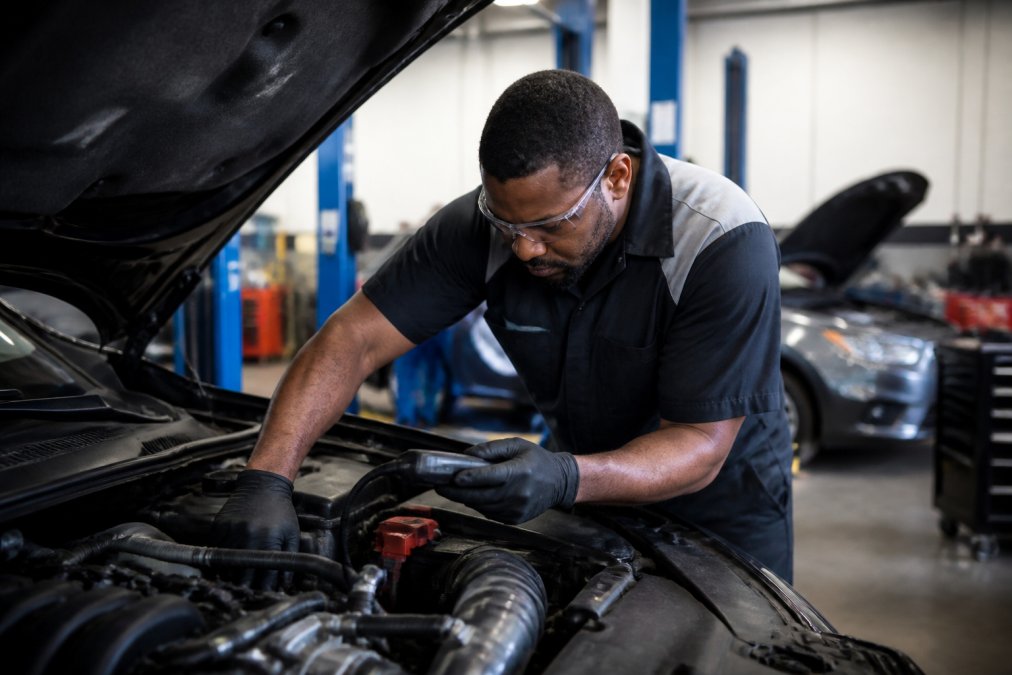
Finding a mechanic you actually trust is harder than it should be. The industry has a reputation problem because too many shops prioritize upselling over honesty. But trustworthy mechanics exist, you just need to know what to look for.
Navigating Repair Estimates and Getting Fair Quotes
A repair estimate is a contract offer that helps you manage car repairs by clarifying what work will be done, what parts will be used, and what you’ll pay. It tells you what work will be done, what parts will be used, and what you’ll pay. Understanding how to read and negotiate estimates is essential to managing car repairs effectively, and it’s where most owners feel the most vulnerable.
Decoding the Itemized Estimate
Example of a clear estimate:
- Serpentine belt (part): $45
- Serpentine belt installation (labor): 1.5 hours × $85/hour = $127.50
- Water pump (part): $120
- Water pump installation (labor): 2 hours × $85/hour = $170
- Thermostat (part): $35
- Thermostat installation (labor): 1 hour × $85/hour = $85
- Total: $582.50
Understanding Labor Rates
Comparing Multiple Estimates
Example: Two shops quote brake work on your vehicle.
- Shop A: Replace brake pads and resurface rotors, $450
- Shop B: Replace brake pads only, $280
Negotiating Without Sacrificing Quality
Negotiation is appropriate, but know where the lines are. You can negotiate on:
- Parts choice: Ask if aftermarket parts are available for items like filters, belts, hoses, and brake pads. Aftermarket parts are often cheaper than OEM and perform identically for routine items.
- Labor rate: For larger jobs (over $1,000), some shops will negotiate their hourly rate or offer a discount. It never hurts to ask, “Is there any flexibility on labor for a job this size?”
- Timing: If you can wait a few weeks, some shops offer discounts for scheduling during slower periods.
- Bundling: If you have multiple repairs needed, ask if the shop will discount the total for doing everything at once.
You should NOT negotiate on:
- Safety-critical work: Brake repairs, suspension work, and steering components must be done to specification. Don’t ask for a cheaper way to fix brakes.
- Diagnostic fees: If a shop charges $100 to diagnose a problem, that’s fair. They’re using specialized equipment and expertise. However, most shops will credit the diagnostic fee toward the repair if you authorize the work.
- Warranty: Don’t ask a shop to reduce their warranty (typically 12 months or 12,000 miles) to lower the price. A warranty is a sign of confidence in the work.
The Written Estimate as Protection
Never authorize work based on a verbal estimate or a vague written one. A proper written estimate protects both you and the shop by creating a clear agreement. It should include:
- The specific repairs to be performed
- Parts and labor costs itemized
- The shop’s hourly labor rate
- Total cost
- Warranty on the work (usually 12 months or 12,000 miles)
- A note about what happens if additional problems are discovered during repair (most shops will contact you before proceeding)
Pro Tip
Before authorizing any estimate, ask: “If you find additional problems while working on my vehicle, will you contact me before fixing them?” A shop that says yes is protecting your interests. One that hedges or refuses is a red flag.
Before authorizing any estimate, ask: “If you find additional problems while working on my vehicle, will you contact me before fixing them?” A shop that says yes is protecting your interests. One that hedges or refuses is a red flag.
Red Flags in Estimates
Walk away from a shop if:
- They refuse to provide a written estimate
- The estimate is vague or lacks itemization
- They recommend work you didn’t ask for without explaining why (and showing you the problem)
- Their labor rate is significantly higher than competitors with no explanation
- They pressure you to authorize work immediately without time to think
- They recommend replacing parts that typically last much longer than your vehicle’s age or mileage
The Difference Between Synthetic and Conventional Oil
Oil is the lifeblood of your engine, and choosing between synthetic and conventional is one of the most common decisions owners face. The difference matters more than most people realize.
Key Takeaway
Synthetic oil costs more per change but lasts longer and protects your engine better, especially under stress. For most owners keeping their vehicle long-term, synthetic pays for itself through reduced maintenance frequency and better engine longevity.
Synthetic oil costs more per change but lasts longer and protects your engine better, especially under stress. For most owners keeping their vehicle long-term, synthetic pays for itself through reduced maintenance frequency and better engine longevity.
DIY Maintenance Tasks vs. Professional Repairs
Knowing which maintenance tasks you can handle yourself and which require a professional mechanic saves money and prevents costly mistakes. The line between DIY and professional work depends on your skill level, tools, and the complexity of the task.
Reading Dashboard Warning Lights and Taking Action
Your dashboard lights are your vehicle’s way of telling you something needs attention. Ignoring them is how small problems become big, expensive repairs.
Keeping Digital Records of Your Vehicle’s Repair History
Your vehicle’s repair history is valuable documentation. It proves you’ve maintained the vehicle properly, helps you spot recurring problems, and protects your warranty claims. Digital records are superior to paper because they’re searchable, backed up, and easy to share.
Understanding Warranty Coverage and Repair Protection
Vehicle warranties are contracts that define what the manufacturer will repair or replace at no cost to you. Understanding the terms, limits, and exclusions prevents expensive surprises and helps you make informed decisions about extended coverage. Most owners misunderstand their warranty, which costs them money.
Factory Warranty Basics
Every new vehicle comes with a factory warranty. The standard coverage includes:
- Bumper-to-bumper (comprehensive) warranty: Covers virtually all components except wear items (brakes, tires, wiper blades, spark plugs).
- Powertrain warranty: Covers the engine, transmission, drivetrain, and transfer case. This lasts longer because these are the most expensive components to repair.
- Corrosion warranty: Covers rust perforation on the body.
- Emissions warranty: Covers emissions-related components.
What’s Excluded from Factory Warranty
Factory warranties do NOT cover:
- Wear items: Brake pads, rotors, tires, wiper blades, air filters, cabin air filters, spark plugs, and light bulbs are considered consumables. You’re responsible for replacing them.
- Damage from accidents or misuse: If you crash the vehicle or use it for racing, warranty coverage is void.
- Lack of maintenance: If you skip oil changes or ignore service intervals, the manufacturer can deny warranty claims. This is why keeping service records is critical.
- Modifications: Aftermarket parts, engine tuning, or suspension modifications can void warranty coverage on related systems. If you modify your vehicle, ask the manufacturer or dealer which warranty coverage is affected.
- Normal wear and tear: Fading paint, worn interior trim, and minor cosmetic issues are not covered.
- Damage from neglect: If a component fails because you ignored a warning light or didn’t maintain the vehicle, warranty doesn’t apply.
Powertrain vs. Bumper-to-Bumper: What’s the Difference?
How to Claim Warranty Work
- Schedule service at the dealership and mention that you believe the repair is covered under warranty.
- Bring your keys and proof of ownership (registration or title).
- The dealer will diagnose the problem and determine whether it’s covered. This diagnosis is usually free.
- If covered, the dealer performs the repair at no cost to you. If not covered, they’ll give you an estimate and ask if you want to proceed.
- Keep the warranty repair receipt as proof that the work was done under warranty. This is important if the same component fails again, it proves the original repair was done by an authorized dealer.
Extended Warranties: Are They Worth It?
Before buying an extended warranty, consider:
- The vehicle’s reliability history: If you’re buying a Toyota or Honda with a strong track record, an extended warranty may not be necessary. If you’re buying a brand known for transmission problems, extended warranty might be worth it.
- How long you plan to keep the vehicle: If you trade in or sell after 5 years, extended warranty is wasted money. If you plan to keep the vehicle 10+ years, it’s more valuable.
- The cost of potential repairs: A transmission rebuild is expensive. If an extended warranty covers transmission, it might be worth it. If it excludes transmission, it’s not.
- Your financial cushion: If you have an emergency fund for car repairs, extended warranty is less critical. If unexpected repairs would strain your finances, extended warranty provides peace of mind.
Read the fine print carefully. Some extended warranties exclude:
- Wear items (brakes, tires, filters)
- Maintenance items (oil changes, fluid flushes)
- Electrical components
- Suspension and steering
- Specific high-failure components
Recalls: Always Free, Regardless of Warranty Status
Maintaining Your Warranty: Critical Maintenance Requirements
To protect your warranty:
- Follow the maintenance schedule in your owner’s manual exactly. If the manual says oil changes every 5,000 miles, do them every 5,000 miles. If you skip intervals, the manufacturer can argue that neglect caused the failure.
- Keep all service records. Save receipts from every oil change, tire rotation, and service. Digital records are best because they’re backed up and searchable. If you can’t prove you maintained the vehicle, the manufacturer can deny claims.
- Use the correct fluids and parts. Your owner’s manual specifies the oil viscosity, coolant type, and transmission fluid. Using the wrong fluid can void warranty. If a component fails and the manufacturer determines it was caused by using the wrong fluid, warranty is void.
- Don’t modify the vehicle. Engine tuning, suspension modifications, and aftermarket parts can void warranty on related systems. If you modify your vehicle, ask the manufacturer which warranty coverage is affected.
- Have warranty work done at authorized dealers. If an independent shop performs a repair that later fails, the manufacturer might deny warranty coverage for the related component, arguing that the independent shop’s work caused the failure.
Watch Out
Skipping a single oil change can give the manufacturer grounds to deny warranty claims on engine-related components. Maintenance records are your proof that you’ve upheld your end of the warranty contract.
Skipping a single oil change can give the manufacturer grounds to deny warranty claims on engine-related components. Maintenance records are your proof that you’ve upheld your end of the warranty contract.
Transferable Warranty: Selling Your Vehicle
Lemon Law Protection
Key Takeaway
Your warranty is a contract. The manufacturer’s obligation is to repair covered defects. Your obligation is to maintain the vehicle according to the owner’s manual and keep records. Uphold your end, and the manufacturer must uphold theirs.
Your warranty is a contract. The manufacturer’s obligation is to repair covered defects. Your obligation is to maintain the vehicle according to the owner’s manual and keep records. Uphold your end, and the manufacturer must uphold theirs.
Reducing Labor Costs Without Sacrificing Quality
Labor is often the largest component of a repair bill. Reducing labor costs without cutting corners requires strategy and honesty with your mechanic.
Pro Tip
Preventative maintenance reduces labor costs more than any other strategy. A transmission fluid flush prevents a transmission rebuild. Prevention is always cheaper than repair.
Preventative maintenance reduces labor costs more than any other strategy. A transmission fluid flush prevents a transmission rebuild. Prevention is always cheaper than repair.
Emergency Roadside Repair Kits and What to Keep in Your Vehicle
An emergency roadside kit keeps you safe if your vehicle breaks down far from a repair shop. You don’t need much, just items that address the most common roadside emergencies.
Common Repair Mistakes and How to Avoid Them
Understanding common mistakes helps you avoid them. Most repair mistakes stem from either rushing or not asking enough questions.
| Task | Frequency | DIY or Professional |
|---|---|---|
| Check tire pressure | Monthly | DIY |
| Oil and filter change | Every 5,000-10,000 miles | Either |
| Tire rotation | Every 5,000-7,000 miles | Either |
| Brake inspection | Every 12,000 miles | Professional |
| Fluid level checks | Monthly | DIY |
| Air filter replacement | Every 12,000-15,000 miles | DIY or Professional |
| Transmission fluid flush | Every 30,000-60,000 miles | Professional |
| Coolant flush | Every 30,000-50,000 miles | Professional |
Frequently Asked Questions
What is the best way to manage car repairs on a tight budget?
Start by following a preventative maintenance checklist to catch small issues before they become expensive. Get multiple repair estimates to compare fair pricing. Prioritize repairs that affect safety, then schedule cosmetic or non-urgent work when you have funds available. Keep a dedicated repair fund by setting aside money monthly. Ask your mechanic about OEM versus aftermarket parts, aftermarket options can reduce costs while maintaining quality.
How often should I follow a preventative maintenance checklist?
Check your vehicle owner’s manual for the manufacturer’s recommended service intervals, typically every 5,000 to 10,000 miles for oil changes. Most vehicles benefit from a seasonal checkup twice yearly. Inspect fluid levels, tire tread depth, and brake pads monthly. Professional inspections should happen annually or as specified in your manual. Staying on schedule prevents costly repairs and extends your vehicle’s longevity significantly.
What is the difference between synthetic and conventional oil?
Conventional oil breaks down faster, requiring more frequent changes every 3,000 to 5,000 miles. Synthetic oil lasts longer, often 7,500 to 10,000 miles between changes, and performs better in extreme temperatures. Synthetic costs more upfront but reduces overall maintenance expenses over time. Your vehicle’s manual specifies which type to use. Some vehicles require synthetic exclusively, while others accept either. Switching between types is safe if you follow manufacturer recommendations.
How do I know if a mechanic’s repair estimate is fair?
Verify fair labor rates and parts costs for your vehicle make and model in your area. Get estimates from at least two shops to compare. Ask the mechanic to explain the diagnostic fee, parts cost, and labor hours separately. Certified technicians typically charge fair rates because they maintain professional standards. Request a breakdown of what work is necessary versus recommended, and ask about warranty coverage on parts and labor.
What are the most common car repair mistakes owners make?
Ignoring warning lights and dashboard indicators until small problems become major failures is the costliest mistake. Skipping routine maintenance to save money in the short term leads to expensive repairs later. Choosing the cheapest repair shop without checking credentials or reviews often results in poor-quality work. Failing to keep a maintenance log makes it hard to track service history, affecting resale value. Not reading your vehicle owner’s manual means missing critical service intervals and requirements.
Should I use OEM or aftermarket parts for repairs?
OEM parts are manufacturer-made and fit perfectly, with full warranty coverage. Aftermarket parts are third-party alternatives that cost less but vary in quality. For critical safety components like brakes or suspension, OEM parts offer peace of mind. For wear items like air filters or wiper blades, quality aftermarket options work well. Ask your mechanic which parts they recommend for your specific repair. Most shops stand behind both options with warranty coverage.
What should I keep in an emergency roadside repair kit?
Essential items include jumper cables or a portable jump starter, a tire repair kit with plugs and patches, a basic tool set with wrenches and screwdrivers, spare belts and hoses, duct tape, and extra engine oil. Include a flashlight, work gloves, and a reflective vest for visibility. Keep your vehicle’s manual and a list of emergency contacts. Store the kit in your trunk. Having these items prevents minor issues from stranding you and buys time until professional help arrives.


Comments are closed