
Subtotal $0.00

Table of Contents
- What Makes Certified GM Mechanics Different From General Repair Shops
- Benefits of ASE Certified Technicians for Your GM Vehicle
- TIPS Automotive: West Atlanta’s Certified GM Repair Specialist
- Core Services Offered by Certified GM Mechanics at TIPS Automotive
- Common Chevrolet Repair Issues and How to Catch Them Early
- GM Vehicle Maintenance Schedule: What to Service and When
- GM Recall Assistance and Warranty Repair: What Independent Shops Can Do
- Cost Transparency: How to Get an Honest Repair Estimate
- Independent Shop vs. Dealership for GM Repairs: How to Decide
- Frequently Asked Questions
Last Updated: August 31, 2026
Most GM owners don’t realize how much the right technician matters until something goes wrong. A generic shop can change your oil, but diagnosing a powertrain fault code on a 2020 Cadillac Escalade requires GM-specific diagnostic equipment and training that most general repair shops simply don’t have. At TIPS Automotive, we work with West Atlanta drivers who need certified GM mechanics, not a shop that treats every vehicle the same regardless of make.
This guide covers what separates certified GM mechanics from general repair shops, what ASE certification actually means for your vehicle, the full range of services available, and how to avoid the most common mistakes GM owners make when choosing where to get their car serviced.
Quick Picks:
- Best Overall for GM Vehicles: TIPS Automotive, GM-specific diagnostic tools, ASE-certified technicians, same-day service, and free pickup within 10 miles
- Best for Convenience: TIPS Automotive’s free pickup and drop-off program for West Atlanta residents within a 10-mile radius
- Best for Transparency: TIPS Automotive’s upfront estimate process before any work begins
What Makes Certified GM Mechanics Different From General Repair Shops
Certified GM mechanics are automotive technicians who have completed specialized training and hold credentials specifically tied to General Motors vehicles, including Chevrolet, GMC, Buick, and Cadillac models. General repair shops can handle basic maintenance on any vehicle, but they lack the brand-specific knowledge, software access, and tooling that GM vehicles require for accurate diagnosis and repair.
The gap shows up most clearly in diagnostics. GM vehicles use proprietary fault code systems that standard OBD-II scanners can only partially read. A certified technician with GM-specific diagnostic software sees the full picture: module-to-module communication errors, transmission adaptive data, and powertrain control module history that a generic scan tool misses entirely. That difference can mean the distinction between a $200 sensor replacement and an unnecessary $1,500 transmission overhaul.
There’s also the matter of parts. GM vehicles are engineered to tight tolerances, and aftermarket parts don’t always meet those specs. Certified shops understand which components require OEM-grade replacements and which aftermarket options are acceptable, saving you money without compromising vehicle performance or safety.
A common mistake GM owners make is assuming that any ASE-certified shop is equivalent to a GM-trained one. ASE certification covers broad automotive competency. GM-specific training goes deeper into the architecture of these vehicles, their electrical systems, chassis geometry, and factory-calibrated software. For routine oil changes, the difference is minor. For engine diagnostics, electrical system repair, or transmission service, it’s significant.
| Service Type | General Shop | Certified GM Mechanic |
|---|---|---|
| Oil change and fluid exchange | Yes | Yes |
| Basic brake service | Yes | Yes |
| GM proprietary fault code diagnosis | Partial | Full |
| Transmission adaptive reset | Unlikely | Yes |
| GM module programming | No | Yes |
| Factory maintenance schedule | Generic | GM-specific |
Benefits of ASE Certified Technicians for Your GM Vehicle
ASE certification is the automotive industry’s primary credential for verifying technician competency. The National Institute for Automotive Service Excellence (ASE) certification program requires technicians to pass rigorous written exams covering specific repair categories and to demonstrate real-world hands-on experience before earning their credentials.
How ASE Certification Protects You From Unnecessary Repairs
ASE-certified technicians are trained to diagnose accurately before recommending repairs. That matters enormously for GM owners who have heard the horror stories: shops that replace parts based on guesswork, or worse, recommend work that isn’t needed at all. Certification creates accountability. Technicians who hold ASE credentials have passed standardized testing that validates their diagnostic reasoning, not just their wrench skills.
Certification also requires recertification on a regular basis, which means certified technicians stay current with evolving vehicle technology. GM has updated its electrical architecture, transmission controls, and emissions systems significantly over the past decade. A technician who earned their credentials years ago and hasn’t recertified may be working from outdated knowledge.
The practical result for you: fewer misdiagnoses, fewer unnecessary parts replacements, and repair estimates you can actually trust.
Factory-Trained vs. ASE-Certified: What the Difference Means in Practice
Factory-trained technicians have completed manufacturer-specific programs run by GM, covering the proprietary systems, software, and repair procedures unique to GM vehicles. ASE certification is broader, it validates general automotive competency across categories like brakes, electrical systems, and engine performance.
The strongest independent shops combine both. A technician who holds ASE credentials and has completed GM-specific technical training brings the best of both worlds: independently verified competency plus brand-specific expertise. For complex repairs involving GM’s proprietary powertrain or chassis systems, that combination is what separates a shop that gets it right the first time from one that’s learning on your vehicle.
Pro Tip
Ask any shop directly: “Do your technicians hold current ASE certifications, and have any of them completed GM-specific technical training?” A shop confident in their credentials will answer immediately. Vague answers are a red flag.
Ask any shop directly: “Do your technicians hold current ASE certifications, and have any of them completed GM-specific technical training?” A shop confident in their credentials will answer immediately. Vague answers are a red flag.
TIPS Automotive: West Atlanta’s Certified GM Repair Specialist
TIPS Automotive is a full-service auto repair center in West Atlanta with ASE-certified technicians and specialized tools for GM vehicles, including Cadillac, Chevrolet, GMC, and Buick models. The shop combines modern digital diagnostic technology with straightforward, honest communication, no jargon, no unnecessary upsells.
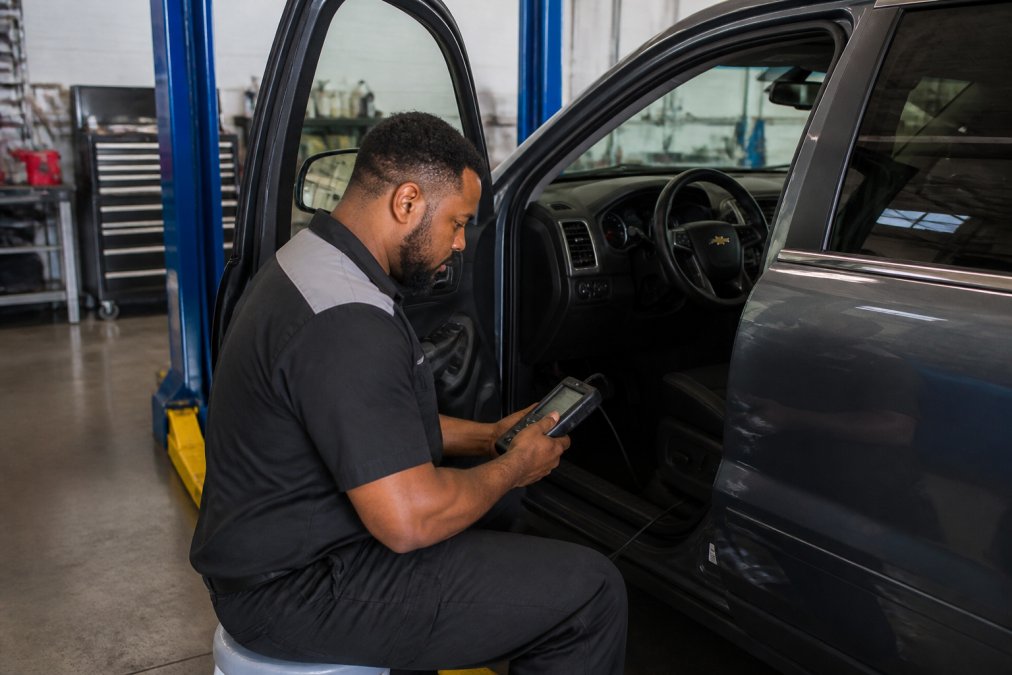
What sets TIPS Automotive apart from the generic service centers nearby isn’t just the certifications, it’s the approach. Customers consistently describe the experience as honest and family-oriented: “Great service with a family feel! I will definitely be back!” That kind of feedback doesn’t come from shops that push unnecessary repairs. It comes from shops that explain what’s actually wrong and why it needs fixing.
GM-Specific Diagnostic Technology and Tooling
TIPS Automotive uses dealership-level diagnostic equipment designed for GM vehicles. Where a standard OBD-II scanner reads surface-level fault codes, GM-specific diagnostic software accesses the full network of vehicle control modules, including the transmission control module, body control module, and powertrain control module, to pinpoint issues accurately.
This matters for Cadillac owners dealing with transmission hesitation, Chevrolet owners with recurring check engine lights, and GMC truck owners experiencing chassis or suspension irregularities. The right tool reads the right data. Without it, even an experienced technician is working partially blind.
Key Takeaway
GM-specific diagnostic tools are the single biggest technical differentiator between an independent specialist and a general repair shop. They’re what allow accurate diagnosis without the guesswork that leads to unnecessary repairs.
GM-specific diagnostic tools are the single biggest technical differentiator between an independent specialist and a general repair shop. They’re what allow accurate diagnosis without the guesswork that leads to unnecessary repairs.
Same-Day Service and Free Pickup Within 10 Miles
TIPS Automotive offers same-day service for many repairs and free vehicle pickup and drop-off within a 10-mile radius. For busy professionals and single parents who can’t afford to lose a car for days, this isn’t a minor convenience, it’s a deciding factor.
The free pickup program is genuine. If you’re within 10 miles, a technician comes to you, picks up your vehicle, performs the service, and returns it. No catch, no hidden fees. For emissions testing, wait times typically run 10 minutes or less for 1996 and newer vehicles.
Core Services Offered by Certified GM Mechanics at TIPS Automotive
TIPS Automotive handles the full range of automotive maintenance and repair for GM vehicles, covering everything from routine preventative care to complex mechanical diagnosis. The shop operates as a true one-stop service center, bumper to bumper.
Brake and Suspension Repair
Brake service and suspension repair are among the most safety-critical services a GM vehicle needs, and they’re areas where GM-specific knowledge makes a real difference. GM trucks and SUVs carry specific brake caliper designs and suspension geometry that require correct torque specs and component compatibility.
TIPS Automotive handles brake pad and rotor replacement, caliper service, brake fluid exchange, and full suspension inspection and repair. Worn shocks, struts, and control arm bushings affect both handling and tire wear, catching them early during a routine inspection prevents more expensive repairs later. Automotive safety depends on these systems working correctly, and preventative maintenance is far cheaper than emergency repair.
Engine Diagnostics, Electrical System Repair, and Transmission Service
Engine diagnostics, electrical system repair, and transmission service are the three areas where choosing the wrong shop is most costly. These systems are deeply interconnected in modern GM vehicles, and a misdiagnosis in any one of them can cascade into unnecessary repairs across the others.
According to the National Highway Traffic Safety Administration’s vehicle safety resources, electrical system faults are among the leading causes of vehicle recalls and safety concerns in late-model vehicles. TIPS Automotive’s diagnostic process starts with a full system scan before any repair recommendation is made, a practice that protects customers from being sold parts they don’t need.
Transmission service at TIPS Automotive covers fluid exchange, filter replacement, and diagnostic evaluation of shift quality and adaptive learning data. For Cadillac owners experiencing hesitation or rough shifting, that adaptive data read is often the difference between a fluid service and an unnecessary rebuild.
Tire Services, Rotation, and Alignment
Tire rotation, wheel alignment, and tire replacement round out TIPS Automotive’s service offering. Proper alignment is especially important for GM trucks and SUVs, where even minor suspension wear can pull alignment out of spec and accelerate tire wear significantly.
Routine tire rotation extends tire life and maintains even tread wear across all four corners. TIPS Automotive handles tire installation, balancing, rotation, and alignment checks as part of both standalone services and scheduled maintenance packages.
Common Chevrolet Repair Issues and How to Catch Them Early
Chevrolet vehicles are reliable, but like any platform, they have known patterns of wear and failure that owners should watch for. Catching these issues early is the difference between a minor repair and a major one.
Check Engine Light and Powertrain Fault Codes
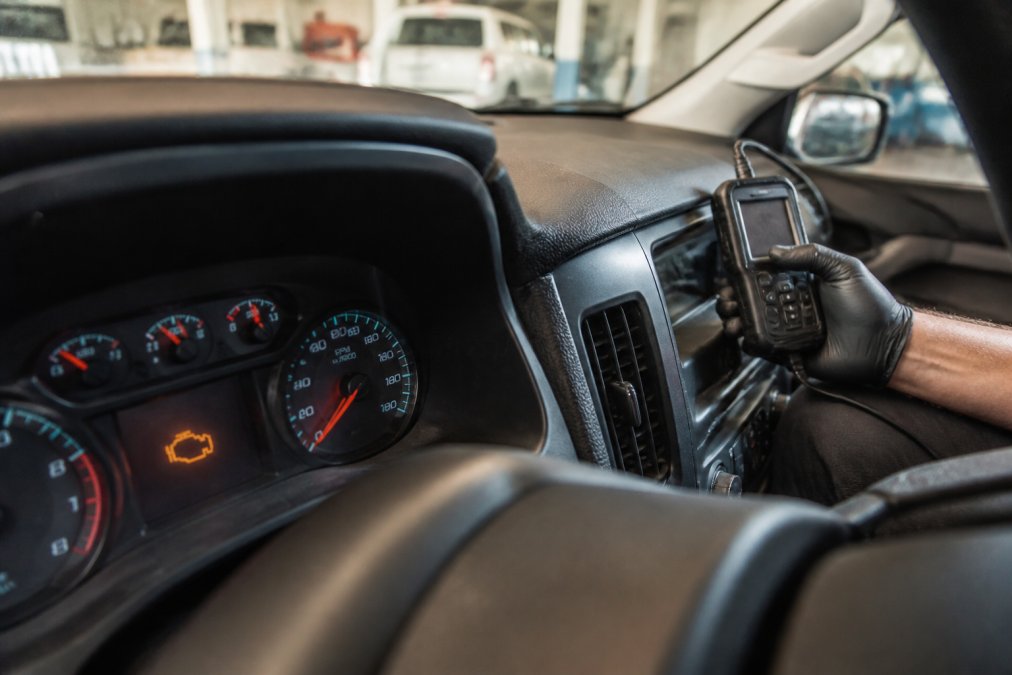
A check engine light on a Chevrolet can mean anything from a loose gas cap to a failing catalytic converter. The fault code stored in the powertrain control module narrows the diagnosis, but reading that code accurately requires GM-compatible diagnostic software, not a generic code reader from the parts store.
Common Chevrolet powertrain fault codes involve oxygen sensors, mass airflow sensors, and evaporative emission system leaks. Left unaddressed, these issues affect fuel economy, emissions performance, and in some cases long-term engine health. Emissions testing failures often trace back to fault codes that were present weeks before the test.
The most important thing Chevrolet owners can do: don’t ignore a check engine light, even if the car seems to drive fine. Many powertrain faults are silent until they cause secondary damage.
Transmission, Chassis, and Suspension Problems
Chevrolet trucks and SUVs are particularly susceptible to transmission shudder at highway speeds, a known issue on certain model years involving torque converter fluid degradation. The fix is often a fluid exchange with updated fluid specification, but only if caught before the shudder becomes a hard fault.
Chassis and suspension wear on Chevrolet trucks typically shows up first as a clunking noise over bumps or uneven tire wear. Front end components, ball joints, tie rod ends, and sway bar links, wear predictably on high-mileage trucks. A proactive suspension inspection at scheduled intervals catches these before they become safety issues.
Watch Out
Ignoring transmission shudder on a Chevrolet truck is one of the most expensive mistakes an owner can make. What starts as a fluid issue can progress to torque converter damage if left unaddressed, turning a service call into a major repair.
Ignoring transmission shudder on a Chevrolet truck is one of the most expensive mistakes an owner can make. What starts as a fluid issue can progress to torque converter damage if left unaddressed, turning a service call into a major repair.
GM Vehicle Maintenance Schedule: What to Service and When
A GM vehicle maintenance schedule is the manufacturer-recommended timeline for servicing specific components to maintain performance, prevent premature wear, and preserve warranty coverage on newer vehicles.
GM’s factory maintenance guidelines use an Oil Life Monitoring System to indicate when an oil change is needed based on actual driving conditions rather than a fixed mileage interval. Beyond oil changes, the schedule covers tire rotation, brake inspection, air filter replacement, transmission fluid, spark plugs, and coolant system service at defined intervals. Following the GM Owner Center factory maintenance guidelines ensures services are performed at the right intervals for your specific model and year.
| Service | Typical Interval | Why It Matters |
|---|---|---|
| Oil change (full synthetic) | Per Oil Life Monitor | Engine lubrication and cleanliness |
| Tire rotation | Every 7,500 miles | Even tread wear, extended tire life |
| Brake inspection | Every 12 months or 15,000 miles | Safety, early wear detection |
| Air filter replacement | Every 30,000 miles | Engine performance and fuel economy |
| Transmission fluid exchange | Every 45,000 miles (severe) | Transmission longevity |
| Spark plugs (iridium) | Every 100,000 miles | Ignition performance |
| Coolant flush | Every 5 years or 150,000 miles | Cooling system protection |
TIPS Automotive handles all factory schedule maintenance for GM vehicles, ensuring each service is performed to manufacturer specifications rather than generic intervals.
GM Recall Assistance and Warranty Repair: What Independent Shops Can Do
GM recall repairs are typically performed at authorized GM dealerships at no cost to the vehicle owner. Independent shops cannot perform official recall repairs under the National Traffic and Motor Vehicle Safety Act, which requires recall work to be completed by the manufacturer’s authorized network.
However, independent certified GM mechanics play a critical supporting role. Many GM owners discover their vehicle has an open recall during a diagnostic appointment at an independent shop. TIPS Automotive technicians check for open recalls as part of the diagnostic process and advise customers on next steps, including what the recall covers and what it doesn’t.
For vehicles outside their original warranty period, independent shops often provide the same quality of repair at a lower overall cost than dealerships. The Federal Trade Commission guidance on auto warranties and independent repair clarifies that using an independent shop for maintenance and repairs does not void a manufacturer’s warranty, provided the shop uses appropriate parts and follows manufacturer procedures.
Post-recall, many GM owners return to TIPS Automotive for follow-up diagnostics to confirm the recall repair resolved the underlying issue, particularly in cases involving electrical system repairs or transmission software updates.
Cost Transparency: How to Get an Honest Repair Estimate
The number one complaint GM owners have about repair shops is unexpected costs. A job quoted at one price finishes at another. Work that wasn’t discussed gets added. Parts are replaced without explanation.
TIPS Automotive’s approach is straightforward: no work begins without a written estimate, and no additional repairs are performed without explicit customer approval. That’s not a policy statement, it’s a practice backed by customer feedback. “Great service! Honest and definitely recommend to all my friends and family!” reflects what happens when a shop prioritizes trust over transaction volume.
When getting any repair estimate, ask these questions:
- Is this a written estimate, or verbal only?
- Does the estimate include parts and labor separately?
- Are the parts OEM, OEM-equivalent, or aftermarket, and why?
- What happens if additional issues are found during the repair?
- Is there a diagnostic fee, and does it apply toward the repair cost?
Pricing for GM repairs varies based on the specific service, parts required, and vehicle model year. TIPS Automotive provides estimates before work begins, contact the shop directly for current pricing on your specific vehicle and service need.
Independent Shop vs. Dealership for GM Repairs: How to Decide
The conventional wisdom says dealerships are the safest choice for GM vehicles. The reality is more nuanced.
Dealerships have direct access to GM’s proprietary software, technical service bulletins, and recall infrastructure. For warranty repairs and recall work, they’re the right choice. For everything else, the calculus shifts.
Independent certified GM mechanics typically offer faster turnaround, more direct communication, and lower labor rates than dealerships. The key qualifier is “certified”, a general independent shop without GM-specific training and tooling doesn’t offer the same diagnostic depth a dealership does. A certified independent shop does.
| Factor | Dealership | Certified Independent (TIPS Automotive) |
|---|---|---|
| Warranty and recall work | Yes | Recall: No; Warranty: Depends |
| GM-specific diagnostic tools | Yes | Yes |
| Labor rate | Higher | Lower |
| Turnaround time | Often slower | Same-day available |
| Communication style | Variable | Direct, plain-language |
| Pickup/drop-off | Rarely | Free within 10 miles |
| Personalized service | Variable | Consistent |
The right answer depends on your situation. Active warranty? Use the dealership for covered repairs. Out of warranty, need fast service, and want honest communication? A certified independent shop like TIPS Automotive is the stronger choice for most repairs.
A common mistake is assuming the dealership’s diagnostic fee is worth paying for every issue. For many GM owners, a certified independent shop diagnoses the same issue faster, at lower cost, and with a clearer explanation of what was found and why it matters.
Frequently Asked Questions
What services do certified GM mechanics in West Atlanta typically offer?
Certified GM mechanics handle the full range of GM vehicle needs: engine diagnostics, transmission repair, brake and suspension service, oil changes, fluid exchanges, tire rotation, alignment, and electrical system repair. A shop like TIPS Automotive also covers factory-scheduled maintenance, emissions testing, and check engine light diagnostics, so GM owners have a single location for both routine preventative care and complex repairs.
Is it better to go to a dealership or an independent shop for GM repairs?
An independent shop with ASE-certified technicians and GM-specific diagnostic equipment can match dealership-level diagnostic capability. Dealerships carry GM OEM parts by default, but a qualified independent specialist can source the same parts. The main advantage of a trusted independent shop is transparent communication, faster scheduling, and the ability to build a long-term relationship with the technicians who know your specific vehicle.
How do I verify if a mechanic is certified for GM vehicles?
Ask the shop directly whether their technicians hold current ASE certifications and whether any have completed GM-specific or factory-trained coursework. Legitimate shops will show proof on request. You can also verify ASE credentials through the National Institute for Automotive Service Excellence website. At TIPS Automotive, technicians are trained and certified, and the shop uses GM-compatible diagnostic technology to back that claim up in practice.
How often should I schedule maintenance for my GM vehicle?
Most GM vehicles use the GM Oil Life Monitoring System to signal when an oil change is due, typically between 5,000 and 7,500 miles depending on driving conditions. Tire rotation is generally recommended every 7,500 miles, brake inspection annually, and transmission fluid exchange per the factory maintenance schedule in your owner’s manual. Following the GM vehicle maintenance schedule consistently is the most reliable way to prevent costly repairs down the road.
What diagnostic technology do modern GM repair shops use?
Shops specializing in GM vehicles use OBD-II scanners that read GM-specific fault codes beyond the generic codes a standard reader captures. Advanced tools like the GM Tech 2 scanner or equivalent professional-grade equipment allow technicians to access powertrain, chassis, and electrical system data at the module level. This depth of automotive diagnostics is what separates a certified GM specialist from a general-purpose repair shop.
Choosing where to take your GM vehicle is one of the most consequential decisions you make as an owner. The wrong shop costs you money, time, and confidence in your vehicle. TIPS Automotive offers ASE-certified technicians with GM-specific diagnostic capability, same-day service, free pickup within 10 miles, and a commitment to transparent estimates before any work begins. Call now and schedule your service with TIPS Automotive to keep your GM vehicle running at its best.

Comments are closed