

Subtotal $0.00


Table of Contents
- Why Verifying Mechanic Certifications Matters for Your Vehicle
- How to Verify Mechanic Certifications: The Step-by-Step Process
- ASE Certification Lookup: How to Check Credentials Online
- Understanding Different Levels of Mechanic Certification
- Individual vs. Shop Certification: What the Difference Means for You
- Spotting Fake Certificates: Visual and Digital Red Flags
- Questions to Ask a Mechanic Before Repairs
- Signs of a Dishonest Auto Repair Shop and How to Avoid Them
- Mobile vs. Brick-and-Mortar Verification: What Changes
- Legal Recourse for Fraudulent Certification Claims
- Frequently Asked Questions
Last Updated: September 20, 2026
Why Verifying Mechanic Certifications Matters for Your Vehicle
Walking into an unfamiliar repair shop and handing over your keys takes trust. Verifying mechanic certifications is how you protect yourself from paying for work done by someone who never earned the credentials they claim. At TIPS Automotive, we believe real certification makes a difference in repair quality and in whether you get honest answers about what your car actually needs.
Certification is more than a piece of paper. It’s proof that a technician passed testing on specific systems and keeps up with training as vehicles change.
Here’s why it matters:
- Consumer protection. Certified techs are tested on the systems they repair.
- Accountability. A certifying board can revoke credentials for misconduct.
- Better diagnostics. Training reduces guesswork and repeat repairs.
- Resale value. Maintenance records from certified shops support your service history.
The National Institute for Automotive Service Excellence sets the standard most shops point to when they call a technician “certified.” That word gets used loosely, so the steps below show you how to check it yourself.
How to Verify Mechanic Certifications: The Step-by-Step Process
Learning how to verify mechanic certifications takes about ten minutes and requires only a name, a certification number, and internet access. The process works the same whether you’re standing in a shop lobby or checking a mobile technician before they start work in your driveway.
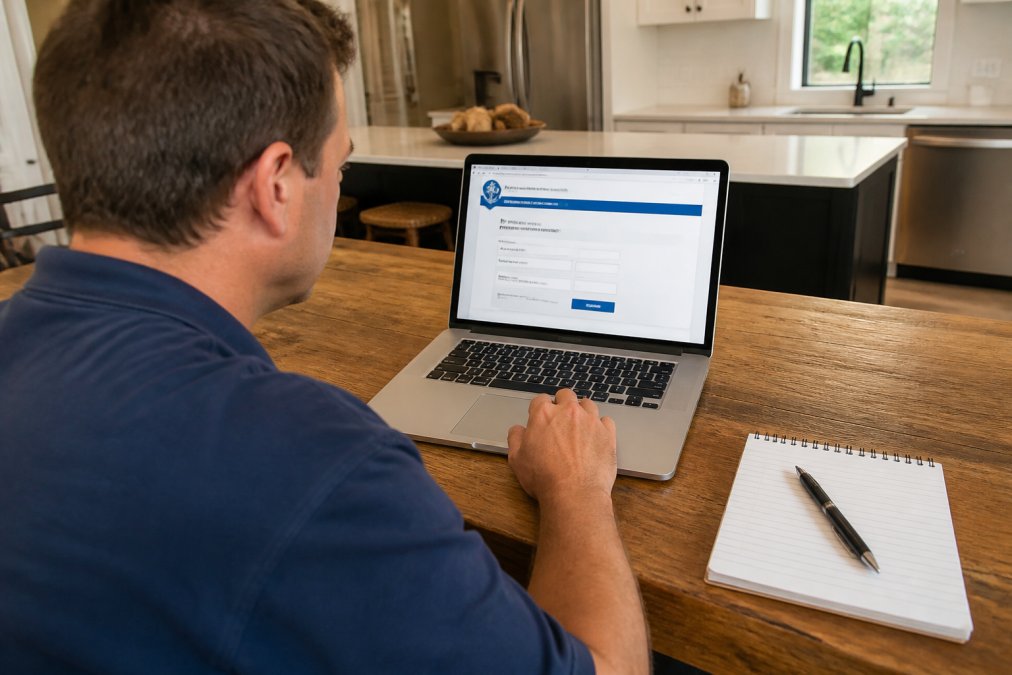
Step 1: Ask for the Technician’s Full Name and Certification Number
Ask the service advisor for the full name of the technician assigned to your vehicle, plus their certification number and the certifying organization. A legitimate shop will hand this over without hesitation.
Red flag: vague answers like “all our guys are certified” without names or numbers.
Step 2: Use the ASE Certification Lookup Tool
Enter the technician’s name and certification number into the online database maintained by the certifying board. The ASE certification lookup shows which tests the technician passed, when each credential expires, and whether it’s still active.
Step 3: Contact the Certifying Board Directly
If the online tool doesn’t return a result, call or email the certifying organization. Ask them to confirm the technician’s certification status in writing. This validation process catches expired credentials the shop may not have noticed.
Pro Tip
Certifications expire on a set cycle, and renewal requires retesting or continuing education. A technician who passed ten years ago and never renewed is not currently certified, even if the shop still displays an old certificate.
Certifications expire on a set cycle, and renewal requires retesting or continuing education. A technician who passed ten years ago and never renewed is not currently certified, even if the shop still displays an old certificate.
ASE Certification Lookup: How to Check Credentials Online
The ASE certification lookup is the fastest way to confirm a technician’s credentials, and it’s free to use. The ASE certification verification portal lets you search by name or certification number and shows current status instantly.
What the lookup tells you:
- Which certification tests the technician passed
- The date each certification was issued
- The expiration date for each credential
- Whether any certification has been suspended or revoked
What it won’t tell you:
- Whether the technician is good at their job
- How the shop handles customer complaints
- Whether the price quoted is fair
Certification confirms knowledge. It doesn’t confirm character. Use the lookup as one input, not the whole decision.
Understanding Different Levels of Mechanic Certification
Certification isn’t one badge. It comes in levels, and the level tells you what a technician is actually qualified to touch. An automotive technician may hold one certification or a dozen, depending on how far they’ve taken their training.
| Certification Level | What It Covers | Best For |
|---|---|---|
| Entry-level (ASE) | One system, such as brakes or electrical | Routine maintenance and single-system repairs |
| Master Technician | Eight or more ASE areas passed | Complex diagnostics across multiple systems |
| Manufacturer-specific | Brand training programs | Warranty work and model-specific repairs |
| Specialty add-ons | Advanced diagnostics, hybrids, or performance | Niche repairs outside general service |
A Master Technician has passed testing in at least eight areas, including engine repair, transmission, and electrical systems. That breadth matters when a problem crosses systems, which is common with modern vehicles.
Individual vs. Shop Certification: What the Difference Means for You
Shop certification and individual certification are two different things, and shops sometimes blur the line. A certified shop has at least one certified technician on staff. That does not mean every person who touches your car holds credentials.
Ask specifically:
- Which technician will work on my vehicle?
- What certifications does that person hold?
- Is the shop itself accredited by any program?
An accreditation applies to the business, not the person. It usually means the shop met facility, equipment, and training requirements set by an outside body. Both matter. A certified tech in an unaccredited shop may lack the tools to do the job right.
Watch Out
Some shops display a framed certificate in the lobby that belongs to a technician who left years ago. Always match the name on the certificate to the person actually assigned to your repair.
Some shops display a framed certificate in the lobby that belongs to a technician who left years ago. Always match the name on the certificate to the person actually assigned to your repair.
Spotting Fake Certificates: Visual and Digital Red Flags
Fake certificates exist, and they fall into three categories: fully fabricated documents, altered real certificates, and expired certificates still on display. Each one fails a different check, so you need to know what each check actually looks for.
How the verification mechanism works. ASE assigns each certified technician a unique certification number tied to their name in a central registry. When you enter that number, the registry returns the tests passed, the issue date, and the expiration date for each credential. A fabricated certificate has no matching number. An altered certificate has a real number that returns a different name. An expired certificate returns a record marked inactive. That single lookup catches all three categories, which is why it beats any visual inspection.
Visual red flags on a wall certificate:
- Blurry printing, uneven fonts, or a misspelled issuing organization
- No certification number printed on the document
- No issue date or expiration date
- A generic “certified technician” seal with no issuing body named
- A logo that doesn’t match the certifying board’s current branding
Digital red flags:
- A certification number that returns no result in the official registry
- A name that doesn’t match anyone currently employed at the shop
- An expiration date that passed months or years ago
- A website address on the certificate that doesn’t resolve
- A screenshot or photocopy offered instead of the original document
The check that matters most. Take the number off the certificate and run it through the registry yourself, on your own phone, while you’re standing in the shop. Don’t accept a screenshot, a photocopy, or a printout the shop hands you. Those can be edited before you ever see them. The registry is the source of truth, and it takes under a minute.
Watch Out
A framed certificate in the lobby may belong to a technician who left years ago. Match the name on the certificate to the person actually assigned to your repair, and confirm the record is still active.
A framed certificate in the lobby may belong to a technician who left years ago. Match the name on the certificate to the person actually assigned to your repair, and confirm the record is still active.
What visual inspection can and can’t do. Visual checks are a first filter, not proof. A well-made fake can pass every visual test. Only the registry lookup confirms status. Treat the visual pass as a reason to look closer, and the registry as the decision.
If the number doesn’t check out. Ask the service advisor to explain the discrepancy before you authorize any work. A legitimate shop will correct the record or reassign the job. A shop that gets defensive or vague is telling you something. Document what you saw, including a photo of the certificate if you can take one, and walk away if the answers don’t hold up.
Questions to Ask a Mechanic Before Repairs
The right questions to ask a mechanic before repairs separate a transparent shop from one that pads the bill. Ask these before you approve any work:
- What’s your name and certification number?
- Can you show me the diagnostic results in plain language?
- Is this repair maintenance or is it urgent?
- What happens if the problem comes back?
- Will you give me a written estimate before starting?
- Can I see the old parts after the repair?
A service professional who welcomes these questions is usually the one you want. Defensiveness is its own answer.
Signs of a Dishonest Auto Repair Shop and How to Avoid Them
Recognizing the signs of a dishonest auto repair shop saves you money and stress. The patterns repeat often enough that you can spot them early.
- Pressure to approve work before you’ve seen a written estimate
- Refusal to show diagnostic results or explain the repair
- Prices that change after the work is done
- No posted license, insurance, or certification information
- Upselling unrelated services during a simple oil change
- No itemized receipt or maintenance records
Avoid these shops by checking credentials before you book, not after. A quick license lookup through your state’s consumer protection office takes two minutes.
Mobile vs. Brick-and-Mortar Verification: What Changes
Mobile mechanics change how verification works, but not whether it’s needed. When a technician comes to you, you lose the lobby, the posted certificates, and the chance to observe the shop. That makes pre-verification more important, not less.
What to do before booking a mobile technician:
- Request the technician’s name and certification number in writing
- Run the number through the official registry before the appointment
- Ask which systems they’re certified to repair
- Confirm they carry insurance for on-site work
- Get the estimate in writing before they arrive
A mobile service center can be just as legitimate as a fixed shop. The difference is that you can’t walk in and see the operation, so the paperwork has to carry more weight.
Legal Recourse for Fraudulent Certification Claims
Claiming a certification you don’t hold is a deceptive business practice, and the recourse depends on which part of the claim is false. A shop that advertises “ASE Certified Technicians” but employs none is making a false advertising claim. A technician who forges a certificate is committing fraud. A shop that charges for work it isn’t qualified to perform may also violate state licensing rules. Each path goes to a different place.
Where to file, and what each agency does:
- State consumer protection office. Every state has one, usually under the attorney general. This is the right first stop for false advertising and deceptive pricing. File online or by mail, and include the shop’s name, address, the exact claim you saw, and your receipts. These offices can mediate, issue fines, or refer the case for enforcement.
- State board that licenses auto repair. Many states require repair shops to register or hold a license. If the shop is licensed, the board can investigate and suspend or revoke that license. If the shop isn’t licensed but should be, that’s a separate violation worth reporting.
- The certifying board. ASE and similar organizations maintain a process for reporting misuse of their marks. A shop using the ASE name without authorization can be told to stop, and a technician who falsified a credential can have it revoked. This doesn’t get your money back, but it stops the next customer from being misled.
- Small claims court. For a refund on work you wouldn’t have authorized had you known the truth, small claims is often the fastest route. Filing fees are low, you don’t need a lawyer, and the dollar limit varies by state. Bring your estimate, receipt, and any photos of the certificate.
- The Federal Trade Commission. The FTC handles deceptive business practices that cross state lines or affect a broad pattern of consumers. It doesn’t resolve individual disputes, but it does build cases from repeated complaints. File at reportfraud.ftc.gov.
What to document before you file. A case built on paperwork is far stronger than one built on memory. Collect:
- The written estimate and the final invoice
- Photos of the certificate or advertisement, including the certification number
- The name of the technician who did the work
- Any texts, emails, or notes from the shop
- A screenshot of the registry result showing no matching record
What to expect. Consumer protection offices vary widely in response time, and some complaints are resolved in weeks while others take months. Small claims is usually the fastest path to a refund. The certifying board process is the fastest way to stop the shop from repeating the claim. Filing with more than one agency is normal and often useful, because each one has a different tool.
Key Takeaway
You don’t need a lawyer to act on a fraudulent certification claim. A registry screenshot, your receipts, and a complaint filed with the right agency are usually enough to start the process.
You don’t need a lawyer to act on a fraudulent certification claim. A registry screenshot, your receipts, and a complaint filed with the right agency are usually enough to start the process.
One practical limit. If the shop did the work correctly and only overstated its credentials, your recovery may be limited to the difference in value, not a full refund. That’s why verifying before you authorize work is always cheaper than pursuing recourse after.
Frequently Asked Questions
How do you know if your mechanic is certified?
Ask for the technician’s full name and certification number, then verify it through the ASE online database or by calling the certifying board. A certified mechanic will have a current credential that matches their name and specialty. You can also look for ASE Blue Seal shop signs, which indicate that a majority of technicians hold ASE certifications. Always confirm the certification expiration date to ensure it is still valid.
Can you look up someone’s ASE certification?
Yes. The ASE certification lookup tool on the ASE website lets you search by name or certification number. You will see the technician’s certification status, the areas they are certified in, and the expiration date. This is the fastest way to verify ASE credentials before authorizing repairs. If the lookup returns no results, ask the shop for alternative proof or contact ASE directly.
Are mechanic certifications required by law in every state?
No. There is no federal law requiring mechanics to be certified, and state requirements vary widely. Some states mandate licensing for certain specialties like emissions testing, while others have no formal requirements. ASE certification is voluntary but widely recognized as a mark of professional competency. Always check your state’s regulations for any specific licensing rules that apply to repair shops or individual technicians.
What should I do if I suspect a shop is using fake certifications?
Document everything: take photos of displayed certificates, note names and numbers, and save any written estimates. Report your suspicions to your state attorney general’s office and the Better Business Bureau. If you paid for repairs based on false credentials, you may have grounds for a fraud claim in small claims court. Contact your state’s consumer protection division for guidance on filing a complaint.
Finding a shop you can trust shouldn’t require a background check every time you need an oil change. At TIPS Automotive, our technicians are trained and certified, and we’ll show you the credentials before you ask. We offer same-day service, free pickup and drop-off within a 10-mile radius, and emissions testing for 1996 and newer vehicles with wait times usually under 10 minutes. Call now and schedule your service, and get a straight answer about what your vehicle actually needs.


Comments are closed