

Subtotal $0.00


Table of Contents
- The Most Common Signs a Mechanic Is Overcharging You
- High-Pressure Sales Tactics and Upselling Red Flags
- How to Read an Auto Repair Estimate
- Average Cost of Car Repairs: Benchmarks Worth Knowing
- How to Ask for a Second Opinion on Car Repairs
- Photo, Video, and Digital Tools That Protect You
- Questions to Ask Your Mechanic Before Authorizing Any Work
- Your Legal Rights and Consumer Protections in Auto Repair
- When to Walk Away, and How to Find a Mechanic You Can Trust
- Conclusion
- Frequently Asked Questions
Last Updated: September 1, 2026
The Most Common Signs a Mechanic Is Overcharging You
Knowing the signs a mechanic is overcharging you is one of the most practical skills a car owner can develop. At TIPS Automotive, we hear from customers regularly who’ve been handed invoices that don’t add up, and the frustration is real. A repair bill that feels wrong usually is wrong, and the patterns are more predictable than most people realize.
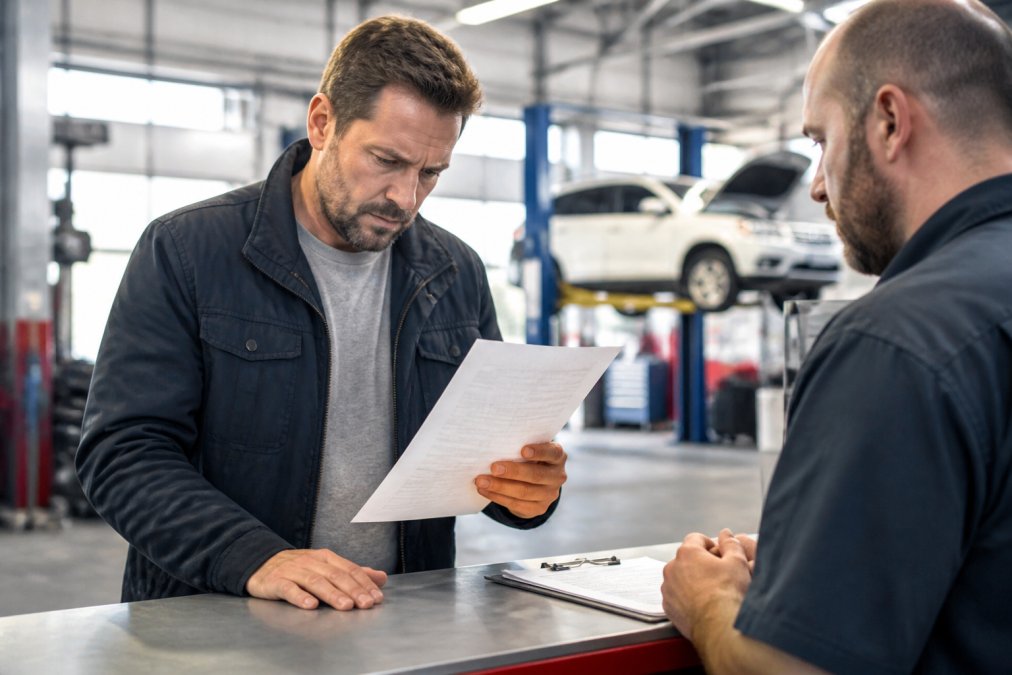
The most consistent signs a mechanic is overcharging you fall into two categories: inflated labor hours and excessive parts markups. Both are easy to obscure on a vague invoice, and both are easy to spot once you know what to look for. Below, we’ll walk through exactly how to read your bill, ask the right questions, and protect yourself before you ever hand over your keys.
Inflated Labor Hours and Phantom Billable Hours
Labor is where the most invisible overcharging happens. Every professional shop uses a flat-rate labor guide, often based on industry-standard references like Mitchell or AllData, that specifies how many hours a particular job should take. A brake pad replacement on a standard sedan, for example, has an established time estimate that doesn’t change whether your technician is fast or slow.
The problem arises when a shop bills you for more hours than the guide specifies, or charges for overlapping labor on jobs performed simultaneously. If your mechanic is replacing your water pump and timing belt at the same time, the labor for accessing both components overlaps. You shouldn’t pay full labor for each job independently. When shops fail to account for this, it’s called “double-dipping” on labor, and it’s one of the most common signs a mechanic is overcharging you.
Ask for the labor time listed on your repair order and compare it against what the job typically requires. The National Institute for Automotive Service Excellence provides consumer resources on understanding what certified technicians are expected to deliver.
Excessive Parts Markup and Unnecessary Replacements
Parts markup is standard practice, shops buy parts at wholesale and sell at retail, which is legitimate. But there’s a point where markup becomes exploitation. A reasonable markup covers the shop’s overhead and sourcing costs. Markups that reach two or three times the wholesale price are a different matter.
The second problem is unnecessary replacements. A mechanic who recommends replacing worn components that still have significant service life left is padding the bill. Brake pads, for instance, are typically measured by thickness. If yours still have usable material, a recommendation to replace them immediately is a red flag. Ask to see the worn components before they’re discarded, and ask what measurement or standard triggered the recommendation.
High-Pressure Sales Tactics and Upselling Red Flags
Most people can feel high-pressure sales tactics even when they can’t name them. A service advisor who rushes you toward a decision, implies your car is unsafe to drive without immediate repairs, or presents a list of “urgent” items during a routine oil change is using classic upselling pressure.
A few specific patterns to watch for:
- The urgency play: “We really can’t let you drive this out of here without fixing X.” If the issue isn’t a genuine safety defect, this is pressure, not advice.
- The bundled recommendation: A long list of repairs presented all at once, without clear priority ranking. Legitimate shops will tell you what’s critical now versus what can wait.
- Vague warnings about “future problems”: Predictions without diagnostic evidence. A trustworthy mechanic shows you the problem, not just describes it.
- No written estimate before work begins: Any shop that starts work without your written authorization is violating your consumer rights in most states.
Upselling isn’t inherently dishonest. Recommending preventative maintenance during a service visit is reasonable. The red flag is when recommendations arrive without evidence, without explanation, and with pressure to decide immediately.
Watch Out
Never authorize repairs verbally. Always get a written estimate before work begins. If a shop starts work without your written approval, that’s a consumer protection issue, not just bad practice.
Never authorize repairs verbally. Always get a written estimate before work begins. If a shop starts work without your written approval, that’s a consumer protection issue, not just bad practice.
How to Read an Auto Repair Estimate
Learning how to read an auto repair estimate is genuinely one of the most useful things a car owner can do. A legitimate estimate is a document you can verify, question, and compare. A vague one is designed to prevent all three.
What a Legitimate Itemized Bill Should Include
A proper repair order should break down every charge into individual line items. Here’s what a legitimate itemized bill should contain:
| Line Item | What It Means | Red Flag If Missing |
|---|---|---|
| Parts name and part number | Identifies the exact component | Generic descriptions like “engine part” |
| Parts unit price | Cost per component before labor | Lump sum with no breakdown |
| Labor operation description | Specific task performed | “Misc. labor” or vague entries |
| Labor hours billed | Time charged per operation | No hours listed, only a flat fee |
| Shop supplies fee | Consumables like rags, fluids | Unexplained percentage charge |
| Diagnostic fee | Charge for OBD-II scan or inspection | Buried or unlisted |
| Tax breakdown | State/local tax applied correctly | Tax applied to labor in non-taxable states |
If your invoice is missing most of these columns, that’s a problem. You’re entitled to a complete breakdown before you pay.
OEM vs. Aftermarket Parts: What You’re Actually Paying For
OEM parts (Original Equipment Manufacturer) are made by the same manufacturer that supplied your vehicle’s factory components. Aftermarket parts are produced by third-party manufacturers and vary widely in quality.
This distinction matters because some shops charge OEM prices while installing aftermarket parts, a direct form of fraud. Others install quality aftermarket parts legitimately at a lower cost, which is perfectly acceptable and often smart for older vehicles.
The key questions: Did the shop tell you which type they’re using? Did you consent to the substitution? According to the Federal Trade Commission consumer guidance on auto repairs, shops are required to disclose parts substitutions and get your approval before making them. If you paid for OEM and got aftermarket, you have grounds for a dispute.
For newer vehicles still under warranty coverage, using non-OEM parts can sometimes affect your warranty terms. Ask specifically before authorizing any parts replacement.
Average Cost of Car Repairs: Benchmarks Worth Knowing
Understanding rough benchmarks for common repairs gives you a reference point when evaluating an estimate. Prices vary by region, vehicle make, and shop rate, but having a ballpark prevents you from being completely in the dark.
The shop rate, the hourly labor charge, is one of the most important numbers to understand. Independent shops typically charge less per hour than dealerships, though both can be legitimate. A shop that refuses to disclose its hourly rate before work begins is worth questioning.
Here are general categories to benchmark:
- Oil change and filter: One of the most straightforward services. Wide price variation exists based on oil type (conventional vs. full synthetic) and vehicle requirements.
- Brake pad replacement: Front and rear pads differ in cost. Rotor replacement adds significantly to the total. Ask whether rotors need replacement or can be resurfaced.
- Diagnostic fee (OBD-II scan): Many shops charge a diagnostic fee to read engine codes. This is legitimate. Some shops waive the fee if you proceed with the repair, ask upfront.
- Timing belt replacement: One of the more expensive maintenance items. Labor hours are substantial, which is why bundling related components (water pump, tensioner) at the same time makes financial sense.
For independent benchmarking, resources like RepairPal’s repair cost estimator provide regional cost ranges for hundreds of common repairs. Using a cost estimator before you walk into any shop is one of the simplest ways to protect yourself.
Pro Tip
Ask the shop for their hourly labor rate before authorizing any work. Then cross-reference the estimated labor hours against what the job typically requires. The math should add up.
Ask the shop for their hourly labor rate before authorizing any work. Then cross-reference the estimated labor hours against what the job typically requires. The math should add up.
How to Ask for a Second Opinion on Car Repairs
Knowing how to ask for a second opinion on car repairs is something many drivers feel awkward about, but shouldn’t. A second opinion is a standard consumer practice, and any reputable shop will respect your right to seek one.
Here’s how to do it without confrontation:
- Get the written estimate first. Before leaving the original shop, ask for a complete written estimate with all line items. Most states require shops to provide this upon request.
- Don’t authorize the work yet. You have the right to take your vehicle to another shop for evaluation before committing to any repair.
- Bring the written estimate to the second shop. Ask them to review the recommended repairs and quote the same work. You’re not asking them to undercut, you’re asking them to confirm whether the diagnosis and scope are accurate.
- Ask specifically about necessity. “Is this repair urgent, or can it wait?” and “What happens if I defer this repair for 90 days?” are direct questions that reveal a lot about a shop’s honesty.
- Compare diagnostic conclusions, not just prices. If both shops agree on the diagnosis but differ on price, you have useful information. If they disagree on what’s wrong, you may need a third opinion.
A shop that discourages you from seeking a second opinion is telling you something important about how they operate.
Photo, Video, and Digital Tools That Protect You
Documentation is your strongest protection against overcharging and disputed repairs. The good news is that your smartphone gives you most of what you need.
Before you drop off your vehicle:
- Photograph your odometer reading
- Walk around the vehicle and photograph all existing damage
- Note your fuel level
During the repair process:
- Ask the shop to photograph or show you the worn components before replacement. A trustworthy shop will do this without hesitation.
- Request photos of any parts they claim are damaged or failed
Digital diagnostic tools:
An OBD-II scanner is a device that reads the engine codes stored in your vehicle’s computer. Inexpensive consumer versions are widely available and plug into the OBD-II port under your dashboard. Before you take your car in for a check engine light, scanning it yourself tells you the specific code. This prevents a shop from diagnosing a simple sensor fault as a major engine issue.
Free and low-cost apps can translate those engine codes into plain English, so you arrive at the shop already knowing what your vehicle’s computer flagged. This doesn’t replace a professional diagnosis, but it means you’re not starting from zero.
As noted in the Consumer Financial Protection Bureau’s guidance on [auto repair(/best-practices-in-auto-repair/) disputes | consumerfinance.gov], keeping thorough documentation of your vehicle’s condition and all repair communications significantly strengthens your position if a dispute arises.
Key Takeaway
Photograph your vehicle’s condition before every service visit. This single habit protects you against claims of pre-existing damage and gives you a timestamped record of your car’s state before the shop touched it.
Photograph your vehicle’s condition before every service visit. This single habit protects you against claims of pre-existing damage and gives you a timestamped record of your car’s state before the shop touched it.
Questions to Ask Your Mechanic Before Authorizing Any Work
The right questions change the dynamic of any repair conversation. They signal that you’re an informed customer, and they give a trustworthy mechanic the opportunity to explain their work clearly.
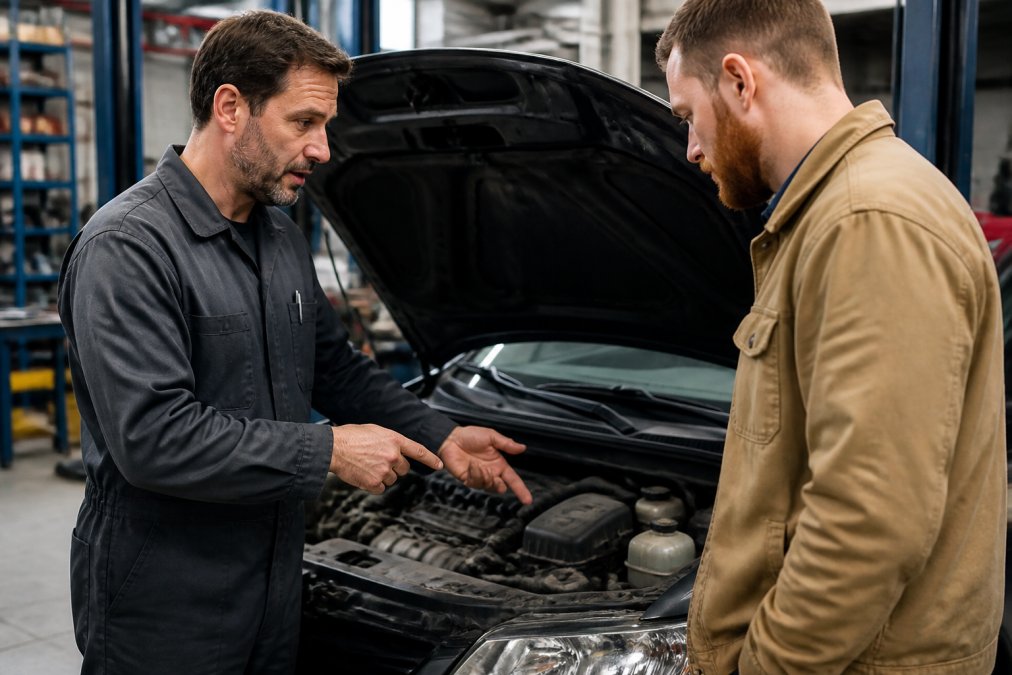
Before you sign any repair authorization, ask these:
“Can you show me the problem?” A mechanic who can physically demonstrate the issue, a worn brake pad, a leaking fluid line, a cracked belt, is giving you verifiable evidence. One who only describes it verbally is asking for trust you haven’t established.
“What is your hourly labor rate?” You’re entitled to know this upfront. If they’re reluctant to answer, that tells you something.
“Are these OEM or aftermarket parts, and what’s the price difference?” This gives you options and prevents substitution without consent.
“Is this repair urgent, or can it be deferred?” Separates genuine safety concerns from maintenance that can wait.
“What does the diagnostic fee cover, and is it applied toward the repair cost?” Understand what you’re paying for before the work starts.
“Do your technicians hold ASE certifications?” Technician certification from the National Institute for Automotive Service Excellence is an industry benchmark for competence and professionalism.
“Can I have the old parts back after the replacement?” Reputable shops will return worn components. If a shop refuses, ask why.
“What warranty do you provide on parts and labor?” Warranty coverage on repairs is standard at reputable shops. Get the terms in writing.
Your Legal Rights and Consumer Protections in Auto Repair
Most drivers don’t know their rights in an auto repair context, and shops count on that. The legal framework varies by state, but a consistent set of consumer protections applies across most of the country.
Written estimates: Most states require shops to provide a written estimate before beginning work and to get your authorization before exceeding that estimate by a specified amount. Verbal estimates are not enforceable in the same way.
Repair authorization: A shop cannot legally perform work on your vehicle without your explicit authorization. Starting repairs without consent can constitute an unauthorized repair, which may give you grounds to refuse payment.
Parts disclosure: The FTC’s Used Car Rule and various state consumer protection laws require shops to disclose whether parts are new, rebuilt, or remanufactured. Substituting aftermarket parts when you’ve paid for OEM is a deceptive practice under most state consumer protection statutes.
Dispute resolution: If you believe you’ve been overcharged or defrauded, your options include:
- Filing a complaint with your state’s Attorney General consumer protection division
- Contacting your state’s Bureau of Automotive Repair (where applicable)
- Filing a complaint with the Better Business Bureau
- Small claims court for disputes under your state’s monetary threshold
Keep all invoices, estimates, and written communications. These are your evidence.
When to Walk Away, and How to Find a Mechanic You Can Trust
Some situations call for a clean exit. Walk away from a shop when:
- They refuse to provide a written estimate before starting work
- They pressure you to authorize repairs immediately without time to review
- They can’t explain why a repair is necessary in plain language
- They discourage or react defensively to a request for a second opinion
- The final invoice doesn’t match the estimate without explanation
Finding a mechanic you can trust takes more than a Google search. Look for shops with ASE-certified technicians, transparent pricing practices, and a track record of clear communication. Read reviews specifically for mentions of honesty and explanation quality, not just speed or price.
The customers who’ve worked with TIPS Automotive consistently describe the same experience: honest assessments, clear explanations, and the feeling of being treated like a person rather than a transaction. One customer put it plainly: “Great service! Honest and definitely recommend to all my friends and family!” That’s the baseline you should expect from any shop you trust with your vehicle.
A trustworthy shop welcomes your questions. It shows you the problem, explains the options, and gives you time to decide. It doesn’t manufacture urgency, obscure its pricing, or substitute parts without telling you. Those aren’t high standards, they’re the minimum.
Pro Tip
When evaluating a new shop, start with a minor service like an oil change or tire rotation. It’s a low-stakes way to assess how they communicate, whether they try to upsell without evidence, and whether their invoice matches the estimate.
When evaluating a new shop, start with a minor service like an oil change or tire rotation. It’s a low-stakes way to assess how they communicate, whether they try to upsell without evidence, and whether their invoice matches the estimate.
Conclusion
Overcharging in auto repair is rarely dramatic. It happens in small increments, an extra labor hour here, a parts markup there, a repair that wasn’t strictly necessary. The signs a mechanic is overcharging you are consistent and learnable, and knowing them shifts the balance back toward you as the customer. The best protection is a combination of documentation, informed questions, and a shop that earns your trust before asking for your authorization.
TIPS Automotive was built on exactly that principle. Our certified technicians use modern digital diagnostic technology to give you accurate assessments, and we explain every recommendation in plain language before any work begins. Same-day service, free pickup and drop-off within 10 miles, and a commitment to transparency that our customers notice. Call now and schedule your service with TIPS Automotive.
Frequently Asked Questions
What should I do if I suspect a mechanic is overcharging me?
Start by requesting a fully itemized repair order that lists every part and labor charge separately. Compare the shop rate and parts prices against published labor guides and online parts retailers. If the numbers still don’t add up, get a written estimate from a second shop before authorizing any work. If you’ve already paid and believe you were overcharged, you can file a complaint with your state’s Bureau of Automotive Repair or consumer protection office, which has authority to investigate auto repair fraud.
How can you tell if a mechanic is upselling unnecessary repairs?
The clearest sign of upselling is urgency without evidence. A trustworthy mechanic shows you the worn component, explains why it’s failing, and gives you a written estimate before any work begins. Watch for vague language like ‘it looks bad in there’ without a photo or physical demonstration. Recommending multiple unrelated repairs in a single visit, especially on a car you just brought in for something minor, is another common upselling pattern worth questioning.
What is the $3,000 rule for car repairs?
The $3,000 rule is a rough consumer guideline suggesting that if a single repair estimate exceeds $3,000 on an older, high-mileage vehicle, you should compare that cost against the car’s current market value before approving the work. If the repair costs more than the vehicle is worth, replacement may be the smarter financial decision. This isn’t a legal standard, it’s a personal finance checkpoint to avoid spending more fixing a car than you’d recover in resale or continued use.
How do I verify whether a mechanic’s labor estimate is fair?
Labor estimates are based on flat-rate guides, industry-standard manuals that assign a set number of hours to each repair regardless of how long a specific technician takes. You can cross-reference these times using free tools like ALLDATA DIY or Mitchell1’s consumer portal. Ask the shop what labor rate per hour they charge, then multiply by the listed hours. If the quoted labor hours are significantly higher than the flat-rate guide, that gap is worth questioning directly with the service advisor.
This article was written using GrandRanker


Comments are closed