
Subtotal $0.00

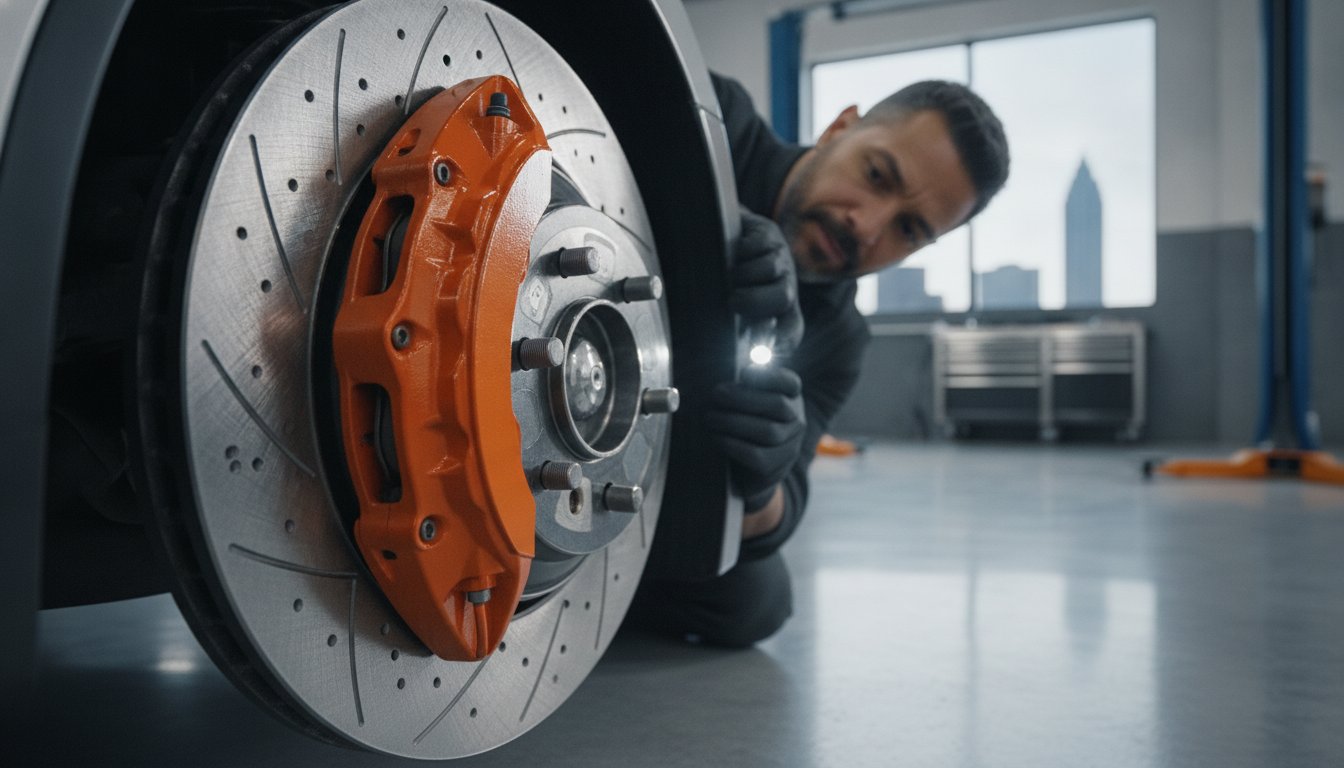
Imagine you’re merging onto I-285 during a rainy rush hour when you tap the pedal and feel a sudden, rhythmic pulsing beneath your foot. It’s a stressful moment that every local driver dreads. This vibration often means your vehicle needs more than just a quick pad swap; it’s a primary indicator that you should look into brake rotor replacement Atlanta experts recommend. Atlanta’s unique blend of high humidity and stop-and-go traffic creates a perfect storm for rotor warping that standard maintenance schedules often miss.
We understand that nothing’s more frustrating than wondering if your car is truly safe or if a mechanic is just trying to pad the bill. You deserve to feel confident every time you hit the brakes on the Connector. This guide will help you identify dangerous wear patterns before they turn into a roadside emergency. We’ll walk you through seven vital warning signs, explain the crucial difference between pad and rotor wear, and provide a clear checklist to help you find a trustworthy local mechanic who prioritizes your safety over high-pressure sales.
Key Takeaways
- Learn to identify specific warning sounds, from high-pitched squeals to heavy grinding, that signal your brake pads have reached their limit.
- Discover why steering wheel vibrations during stops often point to the need for a professional brake rotor replacement Atlanta commuters require for safety in heavy traffic.
- Understand how Georgia’s unique humidity and stop-and-go road conditions can cause your braking system to wear down faster than the national average.
- Find out why a diagnostic-first approach helps you distinguish between a simple pad swap and more complex suspension or alignment issues.
- Get a clear comparison between rotor resurfacing and full replacement so you can make an informed decision that balances cost with long-term reliability.
The Essential Brake Safety Checklist for Atlanta Drivers
Driving in Atlanta requires a braking system you can trust. Whether you’re navigating the downtown connector or sitting in gridlock on I-75, your brakes face extreme heat cycles that most manufacturers’ standard “normal driving” schedules don’t account for. Understanding how disc brakes and rotors work helps you recognize when a simple maintenance task is turning into a safety hazard. Detecting these signs early prevents small issues from becoming expensive repairs that keep your car off the road.
Audible Warning Signs You Should Not Ignore
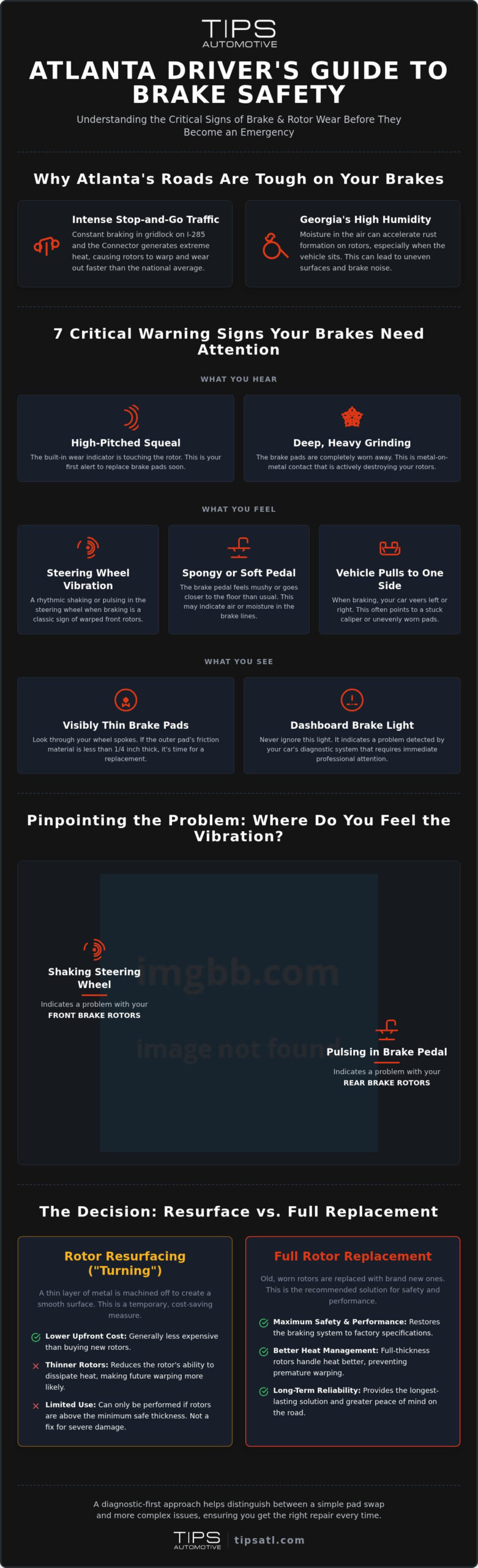
Modern brake pads include a small metal tab known as a wear indicator. When the friction material wears down to a specific level, this tab contacts the rotor to create a high-pitched screech. It’s a built-in alarm system designed to get your attention before damage occurs. If that sound transitions into a heavy grinding noise, you’ve moved past simple wear. Grinding means the friction material is gone, and metal is rubbing against metal. This contact quickly ruins the smooth surface of your rotors. At this point, a standard pad swap won’t suffice, and you’ll likely face the brake rotor replacement Atlanta traffic demands for safe stopping power. You might also notice noise if brake dust builds up excessively, which can create a dry, rasping sound even if the pads have plenty of life left.
Visual and Physical Performance Indicators
You can often perform a quick visual check without even removing your tires. Look through the spokes of your wheels to see the brake pad pressed against the circular metal rotor. If the pad looks thinner than a quarter-inch, it’s nearing the end of its functional life. Beyond what you see, pay attention to what you feel. A “soft” or “spongy” brake pedal often signals air in the hydraulic lines or a fluid leak. When your steering wheel shakes during a stop, it’s a clear sign that a brake rotor replacement Atlanta specialists provide is necessary to restore your vehicle’s safety. These pulses suggest the rotors have warped from excessive heat. Other indicators include:
- The vehicle pulling to one side during deceleration, which may indicate a stuck caliper.
- New vibrations felt through the brake pedal.
- A dashboard brake light that stays illuminated after you start the engine.
A dashboard light is never a suggestion. It’s an immediate signal that your system needs a professional diagnostic to ensure you don’t lose stopping power on the road. Taking action now protects your vehicle’s longevity and your peace of mind.
Identifying Vibration: Is it Pads or Brake Rotor Replacement?
Vibration is one of the most common complaints we hear from drivers. While many people assume a simple pad swap will fix the problem, a shaking sensation usually points to the rotors. When you feel that rhythmic thumping, it’s often time to consider the professional brake rotor replacement Atlanta drivers need to stay safe on the road. This vibration occurs because the rotor surface is no longer perfectly flat. Excessive heat from heavy traffic can create “hot spots,” or hardened patches of metal that don’t wear down at the same rate as the rest of the disc. As the pads pass over these uneven spots, they bounce, sending a pulse through the entire vehicle.
The health of your calipers also plays a major role in how your rotors wear. If a caliper pin sticks, the pad may stay in constant contact with the rotor, generating extreme heat even when you aren’t braking. This leads to uneven thinning and warping. Ignoring these vibrations does more than just make your commute uncomfortable. Over time, the constant shaking acts like a hammer on your vehicle’s front end. It can prematurely wear out your bushings, ball joints, and tie rods. Opting for a high-quality brake rotor replacement Atlanta residents can rely on ensures your car stops smoothly without damaging these expensive suspension components.
The Steering Wheel Shake vs. Pedal Pulsation
Where you feel the vibration tells us exactly where the problem lies. If the steering wheel shimmies in your hands, the issue is likely with your front rotors. These components handle the majority of the braking force and are prone to warping. If you feel a pulsing through your seat or the brake pedal itself, the rear rotors are usually the culprit. These symptoms become much more obvious during high-speed braking on I-285 or I-85. At higher speeds, the frequency of the vibration increases, making it easier to distinguish between a minor tire balance issue and a warped braking surface. For a deeper look at why your vehicle shudders during stops and what it means for your safety, our guide on car shaking when braking Atlanta drivers experience covers the full range of causes and repairs.
When “Turning” Rotors is No Longer an Option
In the past, mechanics often “turned” or resurfaced rotors on a lathe to make them flat again. Today, this is rarely the best choice. Modern vehicle manufacturers design rotors to be as light as possible to improve fuel efficiency, which means they start with less metal. Every rotor has a “minimum thickness” stamped onto it for safety. If a rotor is already near that limit, machining it will leave it too thin to dissipate heat properly. Rotor runout refers to the side-to-side wobble of the rotor as it rotates, which prevents the pads from making smooth, consistent contact. If you’re unsure whether that vibration is a minor alignment issue or a critical safety concern, our team can provide a thorough diagnostic service to find the root cause.
Brake Rotor Replacement vs. Resurfacing: Making the Right Choice
When your brakes start to show signs of wear, you face a choice: smooth out your existing parts or invest in a full brake rotor replacement Atlanta drivers find more reliable in the long run. Resurfacing, often called “turning” rotors, involves using a lathe to shave off a thin layer of metal. This process creates a flat surface for the brake pads to grip. While this might seem like a cost-effective fix, it isn’t always the safest or most durable option for our local driving conditions.
Atlanta’s extreme heat cycles play a major role in this decision. Every time you stop on a hot summer day, your rotors absorb immense thermal energy. High-quality new rotors are designed to dissipate this heat quickly, maintaining your stopping distance and preventing brake fade. When you resurface a rotor, you’re making it thinner. A thinner piece of metal has less mass to absorb heat, which can lead to faster warping and reduced performance during emergency stops.
The Pros and Cons of Resurfacing
The primary advantage of resurfacing is a lower initial price. It can be a viable temporary solution if your rotors are still thick and only have minor surface imperfections. However, the risks often outweigh the savings. Thinner rotors warp much faster during heavy commutes on I-75 or GA-400. Once a rotor reaches its legal safety limit, known as the “discard thickness,” it’s no longer eligible for machining. Attempting to turn a rotor below this limit is dangerous because the metal can crack or fail under the pressure of a hard stop.
The Benefits of Full Rotor Replacement
Choosing a full brake rotor replacement Atlanta residents can trust restores your vehicle to factory-level safety standards. New rotors provide a fresh, clean surface that allows for proper “bedding-in” of the new brake pads. When you pair old rotors with new pads, they often fail to seat perfectly, which can cause annoying squeaks or inconsistent pedal feel. New components ensure your entire system works in harmony.
Upgrading your rotors also maximizes the effectiveness of other maintenance. For example, fresh hardware allows you to get the most out of a brake fluid flush Atlanta experts recommend for hydraulic health. We always suggest matching new pads with new rotors. This “matched set” approach provides the most predictable stopping power and ensures the functional longevity of your vehicle’s braking system.
How Atlanta’s Traffic and Climate Accelerate Brake Wear
Atlanta drivers pay a hidden “stop-and-go” tax every time they commute. While a vehicle in a rural area might go years without major brake service, the constant idling and sudden stops on I-75 and I-85 accelerate wear significantly. Industry professionals often observe that city-driven vehicles require maintenance much sooner than those on open highways. This accelerated timeline makes a regular car diagnostic service Atlanta experts provide essential for catching thin pads before they ruin your rotors and increase your repair costs.
The I-285 Factor: Heat and Friction
Heavy traffic on the Perimeter prevents your braking system from cooling down properly. When you’re constantly tapping the brakes in a traffic jam, the friction creates immense heat that has nowhere to go. This extreme thermal cycle can lead to “glazing,” where the brake pad material becomes hard and smooth like glass. Glazed pads lose their ability to grip the rotor effectively, which increases your stopping distance and forces you to press the pedal harder. To save your rotors during peak traffic, try “engine braking” by letting off the accelerator early and allowing the engine’s natural resistance to slow the car down. This reduces the heat load on your hardware and extends the time between needing a brake rotor replacement Atlanta shops recommend for high-mileage commuters.
Humidity and Corrosion in the Southeast
Georgia’s high humidity adds another layer of stress to your vehicle’s safety. If you park your car outside overnight, you’ve likely seen a thin layer of orange surface rust on your rotors by morning. While a few stops usually clear this off, persistent humidity can lead to “pitting,” where the rust eats small holes into the metal surface. This corrosion doesn’t just affect the rotors; it can cause your calipers to stick or seize. A stuck caliper keeps the pad pressed against the rotor, generating constant heat and causing one side of your car to wear out much faster than the other.
North Georgia’s hilly terrain also plays a role in how your brakes perform. Descending steep grades requires prolonged braking, which can quickly overheat standard rotors and lead to warping. When rain-slicked Atlanta streets make traction a challenge, you need 100% of your rotor’s surface area to be clean and flat. If you’ve noticed a change in how your car handles the rain or a slight pull when stopping, it’s time for a professional inspection. Schedule your brake inspection today to ensure your vehicle is ready for the unique challenges of Georgia driving.
Professional Brake Diagnostic and Replacement at TIPS Automotive
We take a different approach at TIPS Automotive. Instead of jumping straight to a sale, we start with a comprehensive diagnostic. This ensures you aren’t paying for a brake rotor replacement Atlanta driving conditions haven’t actually made necessary yet. Our goal is to provide the peace of mind that comes from knowing your vehicle is mechanically sound. We treat every car like it belongs to one of our own neighbors because we’ve been a staple of the Bolton Road community for over two decades.
Our technicians don’t stop at the brake pads. We inspect the entire suspension system alongside your brakes. Worn shocks or a bad alignment can put uneven pressure on your rotors, leading to premature warping. By looking at the big picture, we help you avoid recurring issues that corporate chains often miss. This thoroughness is why we prioritize restoration and efficiency in every job we handle. We want your vehicle to perform reliably for the long haul, not just until your next oil change.
Our Multi-Point Brake Inspection Process
Precision is the foundation of our work. We use specialized tools to measure rotor runout and pad thickness down to the millimeter. This data-driven method allows us to tell you exactly how much life is left in your system. This ensures we only recommend a brake rotor replacement Atlanta drivers actually need based on technical evidence. We also verify the health of your ABS sensors and check for hydraulic integrity in the master cylinder and brake lines. If we find air in the lines or a fluid leak, we’ll explain the fix clearly. We want you to understand the technical health of your car without feeling overwhelmed by jargon.
Why Bolton Road Drivers Trust TIPS Automotive
Since 2001, we’ve focused on being a reliable pillar for local vehicle owners. We don’t use high-pressure sales tactics. If a part still has safe miles left on it, we’ll tell you. This honesty has helped us build long-term loyalty in the community. While we specialize in stopping power, we are also a full-service engine and transmission shop Atlanta residents rely on for complex mechanical diagnostics and repairs.
We operate Monday through Friday to ensure our team provides the highest level of focused care. Please remember that we do not offer weekend service or body work. If you’re hearing a squeak or feeling a vibration through your pedal, don’t wait for a total failure. Visit us on Bolton Road for a professional assessment that puts your safety and your vehicle’s longevity first.
Secure Your Stopping Power on Atlanta Roads
Navigating the stop-and-go demands of the Perimeter requires a braking system that responds instantly. We’ve explored how recognizing early warning signs, from high-pitched squeals to steering wheel vibrations, can prevent minor wear from turning into a major safety risk. Understanding the specific impact of Georgia’s humidity and terrain helps you stay ahead of the curve. When you prioritize a professional brake rotor replacement Atlanta drivers can trust, you ensure your vehicle remains reliable for every commute.
At TIPS Automotive, we’ve served the Bolton Road community since 2001 with a focus on expert, diagnostic-led repairs. We don’t believe in high-pressure sales; we believe in showing you exactly what your car needs to stay safe. Our team is here Monday through Friday to provide the thorough inspections and quality service you deserve. Take the guesswork out of your vehicle maintenance and drive with confidence knowing your brakes are in top condition.
Schedule Your Professional Brake Diagnostic at TIPS Automotive today. We look forward to helping you keep your car running smoothly and safely for years to come.
Frequently Asked Questions
How long do brake rotors typically last in Atlanta traffic?
Rotors usually last between 30,000 and 70,000 miles, but Atlanta’s stop-and-go traffic on the Perimeter often pushes them toward the lower end of that range. Constant braking in gridlock generates excessive heat, which can lead to warping or thinning faster than highway driving. We recommend a physical inspection every 6 months to catch wear early. Regular checks help ensure your braking system remains efficient despite the city’s demanding driving conditions.
Can I just replace my brake pads and not the rotors?
You can replace just the pads if your rotors still meet the manufacturer’s minimum thickness and are free of warping or deep grooves. However, putting new pads on old, uneven rotors often leads to noise and reduced stopping power. For a professional brake rotor replacement Atlanta drivers rely on for safety, we often suggest doing both simultaneously. This ensures the new pads have a perfectly flat surface to grip for maximum performance.
Why do my brakes squeak in the morning but stop later in the day?
Morning squeaking is usually caused by a thin layer of surface rust that forms on the rotors overnight due to Georgia’s high humidity. This is especially common if your car is parked outside. As you drive and apply the brakes, the pads scrape this moisture-induced oxidation away, and the noise typically disappears. If the sound persists throughout your entire commute, it likely indicates that your brake pads have worn down to the wear indicator.
How much does a typical brake rotor replacement cost in Atlanta?
Costs for brake service vary significantly based on your vehicle type and the specific components needed. In the Atlanta area, industry data suggests that a combined replacement of pads and rotors for a single axle typically falls between $350 and $700. Luxury vehicles or heavy-duty trucks usually require more specialized parts, which can increase the total. For a full transparent breakdown of what influences your final bill, see our detailed guide on how much does brake replacement cost in Atlanta. We provide a transparent breakdown of all costs after our diagnostic-led inspection so you know exactly what you’re paying for.
What happens if I ignore the vibrating steering wheel when braking?
Ignoring a vibrating steering wheel can lead to expensive damage to your vehicle’s suspension and steering components. The pulsing sensation is usually a sign of warped rotors, which act like a hammer on your front end every time you slow down. Over time, this constant shaking wears out ball joints, tie rods, and bushings. Addressing the issue early with a professional brake rotor replacement Atlanta experts provide protects your car’s long-term functional longevity and safety. To better understand all the factors that can cause your vehicle to shake during stops, our comprehensive resource on car shaking when braking Atlanta roads can help you pinpoint the exact source of the problem.
Are ceramic brake pads better for Atlanta driving conditions?
Ceramic pads are often an excellent choice for Atlanta drivers because they handle high temperatures better than organic or semi-metallic alternatives. They produce less dust, which keeps your wheels cleaner, and they tend to operate more quietly. Since they dissipate heat efficiently, they are well-suited for the intense heat cycles of city traffic. During our diagnostic process, we can help you choose the pad material that best fits your specific vehicle and driving habits.
How long does a professional brake replacement take at TIPS Automotive?
A standard brake and rotor replacement typically takes between two to four hours at our Bolton Road shop. This timeframe allows our technicians to perform a thorough diagnostic, replace the necessary hardware, and conduct a test drive to ensure everything is seating correctly. We operate Monday through Friday to provide focused, expert care for every vehicle. We recommend dropping your car off in the morning so we can have you back on the road by the afternoon.
Do I need an alignment after getting new brakes and rotors?
A wheel alignment isn’t strictly required when you get new brakes, but it’s often a smart addition to your maintenance routine. If your car is pulling to one side or if you’ve noticed uneven tire wear, an alignment can prevent these issues from putting extra stress on your new braking components. At TIPS Automotive, we specialize in both suspension and alignment services, allowing us to verify that your entire handling system is working in harmony.
