
Subtotal $0.00

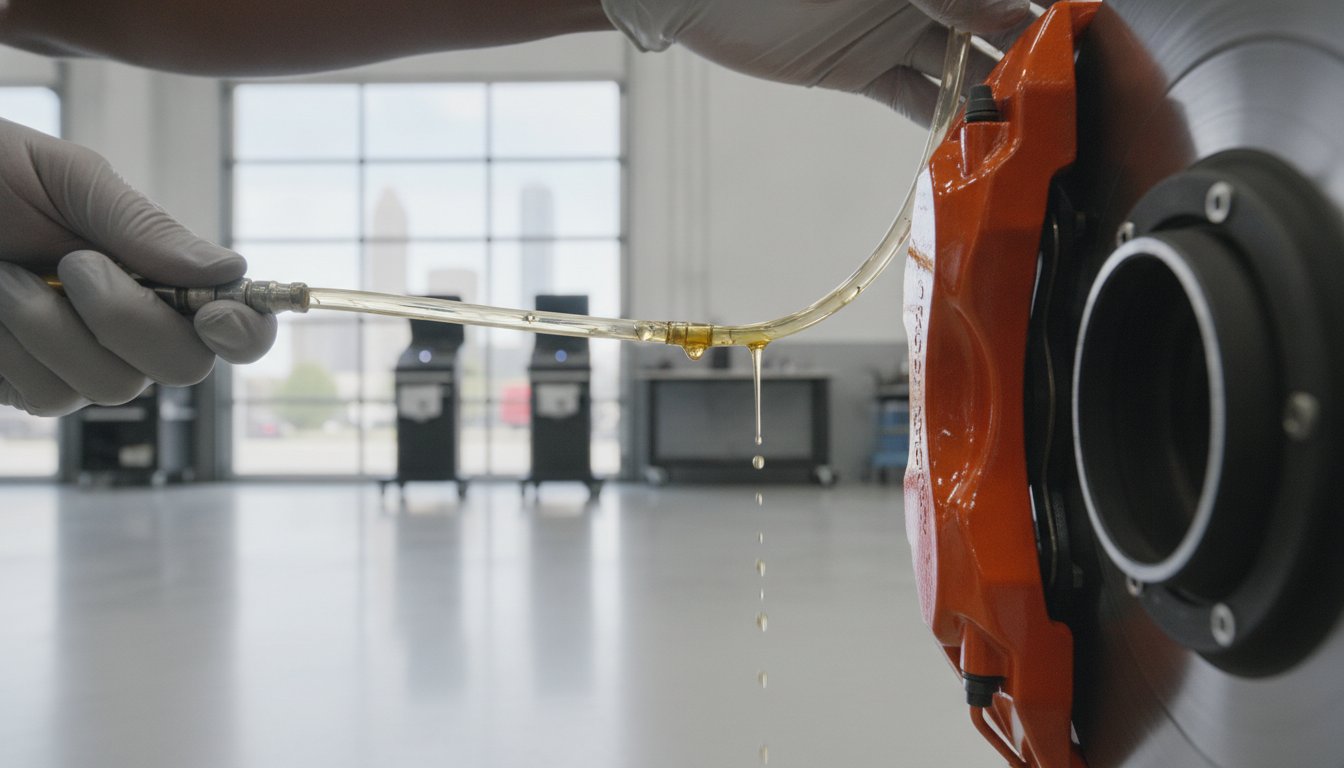
Your brake fluid is likely failing long before your pads wear out, and Atlanta’s humidity is the primary culprit. Most local drivers assume their brakes are in good shape until they are forced to make a sudden stop on a rain-slicked stretch of I-85. That split second when the pedal feels a little too soft can be terrifying. You probably suspect that your vehicle needs more than just a quick inspection, yet the fear of overpaying for a service you don’t fully understand often leads to delay. It’s common to feel overwhelmed by technical jargon or to worry that a brake fluid flush Atlanta is just an unnecessary shop upsell.
In reality, this service is a chemical necessity for safety and functional longevity. We promise to show you exactly how a professional flush restores your stopping power and protects your vehicle’s most expensive components from internal corrosion. This guide will cut through the confusion of DOT ratings, explain how moisture ruins your ABS unit, and provide the expert confirmation you need to drive with total peace of mind. By the end, you will understand why clean fluid is the difference between a firm, reliable pedal and an expensive mechanical failure.
Key Takeaways
- Learn why a full fluid replacement is necessary to maintain the hydraulic pressure required for your vehicle’s stopping power.
- Discover how the high humidity in Georgia accelerates moisture absorption in your brake lines, making a regular brake fluid flush Atlanta a critical safety requirement.
- Understand the technical difference between bleeding air from your lines and a complete system flush to prevent internal corrosion of expensive ABS units.
- Identify the specific physical warning signs, like a soft brake pedal, that indicate your vehicle is overdue for professional hydraulic maintenance.
- See how a diagnostic-first approach ensures your braking system is restored to manufacturer standards using the correct DOT-rated fluids.
What is a Brake Fluid Flush and Why Does it Matter?
A brake fluid flush is more than a simple maintenance check; it is a complete restoration of your vehicle’s hydraulic system. Unlike a “bleed,” which only removes air bubbles, a full flush involves draining every drop of old, contaminated fluid and replacing it with fresh, high-quality liquid. This process is vital for any brake fluid flush Atlanta drivers schedule because it ensures the entire system is free from the moisture and debris that naturally accumulate over time.
Think of your brake fluid as the lifeblood of your stopping system. When you press the pedal, you aren’t physically pushing the brake pads against the rotors. Instead, you are activating a hydraulic lever. The fluid transfers that force from your foot, through the master cylinder, and out to the calipers at each wheel. If the fluid is old or contaminated, that transfer of power becomes inefficient. This often results in a “spongy” pedal feel and increased stopping distances. Maintaining fresh fluid is also essential for protecting the master cylinder, as clean fluid prevents the internal seals from drying out or becoming damaged by grit.
The Difference Between Brake Fluid and Other Fluids
Brake fluid is unique among automotive liquids. While engine oil is designed to lubricate moving parts, brake fluid is designed to be incompressible. It must remain a solid column of liquid even under the extreme heat generated by friction during hard braking. To understand the science behind these requirements, it helps to look at What is Brake Fluid? and how its chemical makeup differs from petroleum-based oils. Most other fluids in your car are replaced based on lubrication quality, but brake fluid is replaced based on its chemical stability and boiling point.
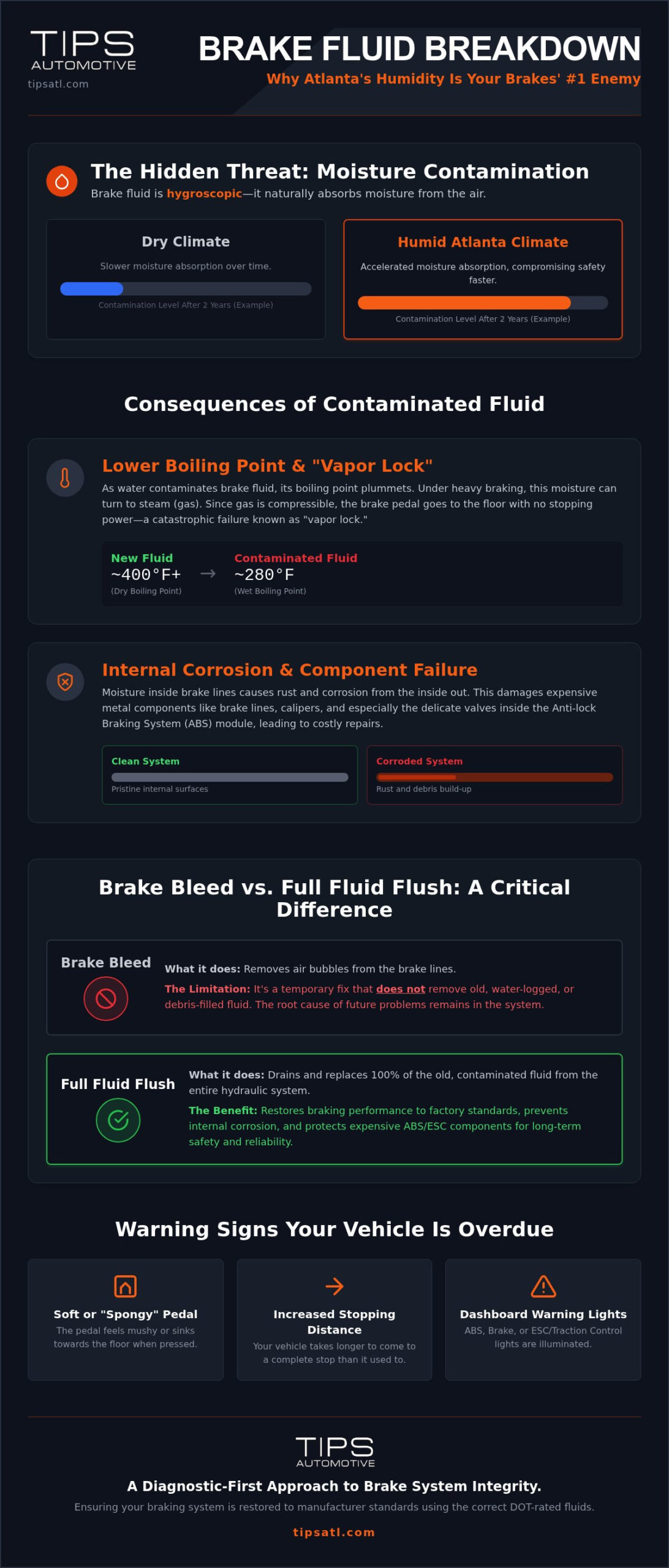
One of the most critical factors is the boiling point. New fluid has a “dry boiling point,” but as it absorbs water, that temperature drops to a “wet boiling point.” If the fluid boils, it turns into gas. Because gas is compressible, your brake pedal will go to the floor without stopping the car. This is why regular replacement is a safety requirement rather than a suggestion.
Brake Fluid and Your Vehicle’s Safety Electronics
Modern vehicles rely on complex electronics like Anti-lock Braking Systems (ABS) and Electronic Stability Control (ESC). These systems use incredibly small valves to pulse the brakes hundreds of times per second. Contaminated fluid can cause these valves to stick or fail entirely. When this happens, your dashboard lights will likely illuminate with diagnostic trouble codes that signal a major system fault.
At TIPS Automotive, we treat a brake fluid flush Atlanta as a preventive diagnostic measure. Keeping the fluid clean avoids the need for a Professional Car Diagnostic Service in Atlanta to track down expensive ABS module failures. By maintaining the chemical integrity of your fluid, you protect the electronic “brain” of your braking system and ensure your safety features work exactly when you need them.
Why Atlanta’s Climate Accelerates Brake Fluid Degradation
Most car owners think their brake system is completely airtight. It isn’t. Brake fluid is hygroscopic, meaning it has a natural tendency to pull moisture from the surrounding air. In the deep South, specifically during a humid summer in Georgia, this process happens much faster than in drier climates. Even though the system is closed, moisture molecules eventually find their way through rubber hoses and the reservoir cap seals. When you consider the need for a brake fluid flush Atlanta humidity is often the hidden reason your system fails prematurely.
Once water enters the lines, it lowers the fluid’s boiling point significantly. Under the Federal Motor Vehicle Safety Standard 116, fluids are rated for their “dry” and “wet” boiling points to account for this inevitable degradation. If that water turns to steam inside your lines, you experience “vapor lock.” Since steam is a gas, it compresses when you hit the pedal, leaving you with no braking force. This moisture also triggers internal corrosion, eating away at metal lines and expensive calipers from the inside out. It’s a silent process that can lead to catastrophic failure during a sudden stop.
The Impact of Stop-and-Go Atlanta Traffic
Sitting on I-75 or the Downtown Connector isn’t just frustrating; it’s physically taxing on your vehicle. Frequent, heavy braking in heavy traffic generates massive amounts of heat. When your fluid is already laden with moisture from our local climate, this heat can easily reach the lowered boiling point of the contaminated liquid. These “city miles” are significantly harder on your hydraulic system than highway cruising. This makes regular brake fluid flush Atlanta services a necessity for daily commuters who spend hours in our famous gridlock.
Identifying Chemical Contamination
Moisture isn’t the only threat to your safety. Over time, the protective additives in the fluid wear out, leading to copper leaching from the internal walls of the brake lines. This copper can act as a catalyst for further corrosion. Rubber seals also begin to break down, adding microscopic debris to the mix. Hygroscopic is the property of absorbing water from the atmosphere, which is a primary cause of brake failure in humid climates. You can’t always judge health by color alone. We use precision testing strips to check for these chemical changes during a standard brake service to ensure your system remains reliable.
Brake Fluid Flush vs. Bleeding: Understanding the Difference
Drivers often hear the terms “bleeding” and “flushing” used interchangeably at quick-lube shops, but they represent two different levels of service. Bleeding the brakes is a targeted procedure designed to remove air bubbles from the hydraulic lines. This is usually necessary after a minor repair, such as replacing a single brake hose. While bleeding ensures the pedal doesn’t feel “spongy,” it doesn’t address the chemical health of the liquid remaining in the system. A professional brake fluid flush Atlanta service is a comprehensive process that replaces the entire volume of fluid from the master cylinder to all four wheels.
The primary risk of choosing a simple bleed over a full flush is the contamination left behind in the ABS modulator. This component is the “brain” of your braking system, and it contains delicate valves that are easily damaged by moisture and acidity. If you only bleed the lines, you’re leaving old, degraded fluid in this expensive module. Adherence to Federal Motor Vehicle Safety Standard No. 116 ensures that the fluid in your system meets specific chemical and performance requirements. For Atlanta drivers, a decision framework is simple: if your vehicle is over two years old or has more than 40,000 miles, a full flush is the only way to guarantee system integrity.
The Process of a Professional Flush
At a professional shop, we use a pressure bleeding system rather than the old “pump the pedal” method. Pressure bleeding forces fresh fluid through the entire system under controlled settings, ensuring that every pocket of old fluid is displaced. Gravity bleeding is often insufficient for modern vehicles because complex ABS valving can trap old fluid and air. We also ensure your vehicle receives the exact DOT rating it requires. Whether your car calls for DOT 3, DOT 4, or the high-performance DOT 5.1, using the correct specification is critical for maintaining the boiling point and viscosity required by your manufacturer.
Comparing Long-Term Costs
It is helpful to view a brake fluid flush Atlanta as an insurance policy for your vehicle’s longevity. While a professional flush typically costs between $150 and $200, it acts as a safeguard against the failure of the ABS pump or master cylinder. Replacing an ABS pump can easily cost $2,000 or more in parts and labor. If you’re also wondering how much does brake replacement cost in Atlanta for pads, rotors, and related components, understanding the full scope of brake service pricing helps you budget for complete system care. Just as we recommend Expert Engine and Transmission Repair in Atlanta for major mechanical issues, we believe preventive hydraulic maintenance is the best way to avoid those large bills. Maintaining fluid purity protects your investment and ensures your vehicle’s most critical safety system remains ready for any emergency stop.
When to Schedule a Brake Fluid Flush in Atlanta
Determining the right time for a brake fluid flush Atlanta drivers can rely on involves more than just looking at the odometer. While your engine oil has a clear life cycle, hydraulic fluid degrades silently. It’s easy to overlook because the changes happen gradually. We recommend making a fluid inspection a standard part of every routine oil change. This proactive approach allows you to catch contamination before it affects your stopping distance or damages your ABS components.
You can perform a basic visual check of your fluid reservoir at home, but you must be careful. Never open the reservoir cap on a humid Atlanta afternoon. Because the fluid is thirsty for moisture, exposing it to the air even for a minute allows water vapor to enter the system. Instead, look through the side of the translucent plastic reservoir to check the level and color. If you aren’t sure about the condition of your fluid, it’s safer to have a professional technician use a dedicated tester to measure the moisture content and copper levels.
5 Signs Your Vehicle Needs a Flush Now
- Spongy or ‘Soft’ Pedal: If you have to press the pedal closer to the floor than usual to stop, moisture has likely compromised the fluid.
- Dashboard Warning Lights: The ABS or brake warning light often triggers when the system detects a pressure imbalance or a sensor fault caused by dirty fluid.
- Strange Noises: A grinding or squealing sound during heavy braking can sometimes indicate that the hydraulic system isn’t applying pressure evenly.
- Burning Smells: If you smell something acrid after a long descent or heavy traffic on the Connector, your fluid may have reached its boiling point.
- Visible Discoloration: Fresh fluid is nearly clear or slightly amber. If yours looks like dark maple syrup or has black flecks in it, it is long overdue for a change.
Recommended Intervals for Georgia Drivers
A safe baseline for most vehicles in our region is every two years or 30,000 miles. This interval accounts for the high humidity that accelerates chemical breakdown. If you drive a high-performance vehicle or frequently use your truck for heavy towing, you may need to adjust this schedule. These activities generate more heat, which places additional stress on the fluid’s chemical stabilizers. Professional diagnostic testing is the only way to determine the exact replacement timing for your specific driving habits. If you notice any of the physical symptoms mentioned above, you should schedule a brake service immediately to ensure your vehicle remains safe on the road. Beyond fluid health, it’s equally important to recognize the broader warning signs of brake wear, and our guide to 7 vital signs your brakes need replacing covers the full checklist Atlanta drivers should know, including when brake rotor replacement Atlanta experts recommend becomes necessary. Keeping your tires in good condition is equally critical, and Atlanta’s pothole-riddled roads mean that precision wheel alignment and tire repair Atlanta drivers rely on should be part of your regular vehicle maintenance routine alongside brake services.
The TIPS Automotive Approach to Brake System Integrity
At TIPS Automotive, we view a brake fluid flush Atlanta as a precision diagnostic service rather than a simple fluid swap. Our team understands that your vehicle’s stopping power is its most critical safety feature. We begin every service with a thorough inspection of the entire hydraulic system. This includes checking for leaks in the lines, assessing the condition of the master cylinder, and testing the fluid’s chemical composition. By identifying potential issues early, we help you avoid the high costs associated with sudden mechanical failures on the road.
We use only high-quality, manufacturer-approved fluids that meet or exceed specific DOT standards. Whether your modern hybrid requires DOT 5.1 or your daily commuter needs DOT 4, we ensure the replacement fluid matches your vehicle’s exact engineering requirements. As a neighborly pillar of the Bolton Road community, our goal is to provide the same level of care we would give our own families. This commitment to thoroughness over “quick-lube” speed ensures your vehicle leaves our shop with a firm pedal and restored safety. Pairing your brake service with a modern car tune-up Atlanta drivers can rely on is one of the most effective ways to ensure your entire vehicle is operating at peak efficiency.
Why Choose an Independent Atlanta Shop?
National chains often treat vehicle maintenance like an assembly line. At TIPS Automotive, we prioritize personalized service and long-term relationships. We know the specific challenges Atlanta drivers face, from the extreme summer heat to the constant braking required in Westside traffic. An independent shop offers the advantage of consistency; you’ll speak with experts who know your vehicle’s history and specific needs. We focus on functional longevity, helping you keep your car on the road for years rather than just getting you through the next few months. This local expertise allows us to provide practical advice that corporate outlets might overlook.
Booking Your Service at TIPS Automotive
We invite you to experience a more thorough approach to vehicle maintenance. Our shop operates Monday through Friday, allowing us to focus entirely on providing high-standard mechanical repairs during the work week. When you visit us for a brake fluid flush Atlanta, you receive a comprehensive brake inspection that covers pads, rotors, and hydraulic integrity. This “diagnostic-first” mindset provides the expert confirmation you need to drive with confidence. We value your time and your safety, ensuring every job is completed with professional authority and care. Schedule your professional brake fluid flush at TIPS Automotive today to restore your vehicle’s stopping power and protect your investment.
Secure Your Stopping Power on Atlanta Roads
Maintaining your vehicle’s hydraulic system is a fundamental part of staying safe in local traffic. You’ve learned that Georgia’s high humidity makes a brake fluid flush Atlanta a chemical necessity rather than an optional upgrade. By choosing a complete flush over a simple bleed, you protect your ABS unit from internal corrosion and ensure your pedal remains firm and responsive. These proactive steps don’t just save you from expensive repairs; they provide the confidence you need during an emergency stop on the Downtown Connector.
Since 2001, TIPS Automotive has served the Bolton Road community with expert diagnostic-led repairs. We believe in thoroughness and functional longevity, focusing on the specific needs of our neighbors. Our team is here Monday through Friday to help you restore your vehicle’s integrity and peace of mind. Don’t wait for a warning light to appear before taking action. Book Your Professional Brake Service at TIPS Automotive today and experience the difference that a dedicated local expert makes. We look forward to keeping you and your family safe on the road for many miles to come.
Frequently Asked Questions
How much does a brake fluid flush cost in Atlanta?
The cost for a professional brake fluid flush Atlanta drivers receive depends on your vehicle’s make and the specific type of DOT fluid required. While prices vary across the region, focusing on the quality of the service is more important than finding the lowest rate. Our diagnostic-led approach ensures a complete system restoration rather than a surface-level exchange. This investment prevents the failure of expensive hydraulic components and protects your safety. For a broader picture of what brake services cost in our area, our detailed breakdown of how much does brake replacement cost in Atlanta covers pads, rotors, and full system repairs with transparent pricing.
Can I just top off my brake fluid instead of flushing it?
Topping off your fluid is a temporary fix that doesn’t address the underlying contamination. Because brake fluid is hygroscopic, the liquid already in your lines has likely absorbed moisture from Atlanta’s humid air. Adding fresh fluid to the reservoir won’t remove the water or debris trapped near your wheels. A full flush is necessary to replace the entire volume of degraded fluid, ensuring your system remains incompressible and safe under heavy braking loads.
What happens if I never change my brake fluid?
Neglecting this service leads to internal corrosion and potential brake failure. Over time, moisture causes the metal lines and rubber seals to break down, creating acidic sludge that damages the master cylinder and ABS pump. Eventually, the fluid’s boiling point drops so low that it can turn into gas during a long drive. This results in a vapor lock condition where your pedal goes to the floor, leaving you unable to stop your vehicle.
Will a brake fluid flush fix a squeaking noise?
A fluid flush usually won’t fix a squeaking noise, as squeaks are typically caused by worn brake pads or glazed rotors. However, the thorough inspection included with a professional brake fluid flush Atlanta service will identify the exact source of the sound. If the squeak is caused by a caliper that isn’t retracting properly due to contaminated fluid, a flush might help. Most often, we recommend this service alongside pad replacement to restore full system integrity. If you’re unsure whether your rotors or pads are the root cause, reviewing the vital signs that indicate brake rotor replacement Atlanta drivers should watch for can help you determine the next step.
How long does a professional brake fluid flush take?
A comprehensive brake fluid flush typically takes between 45 and 90 minutes. This timeframe allows our technicians to perform a full diagnostic inspection of your braking system before using a pressure bleeder to exchange the fluid. We take the time to ensure every drop of old, moisture-laden liquid is removed from the lines and the ABS modulator. This methodical process ensures your vehicle meets manufacturer standards and provides long-term reliability on the road.
Is there a difference between DOT 3 and DOT 4 brake fluid?
Yes, the primary difference is their boiling point and chemical composition. DOT 4 fluid has a higher boiling point than DOT 3, making it better suited for the high-heat conditions of stop-and-go Atlanta traffic. While many modern vehicles require DOT 4 or even DOT 5.1, you must always use the specific rating recommended by your manufacturer. Mixing types can lower the overall performance of the system and potentially damage internal seals over time.
Can contaminated brake fluid cause my check engine light to come on?
Contaminated fluid usually triggers the brake warning light or the ABS light rather than the check engine light. However, in some modern vehicles, a fault in the braking system can communicate with the main engine computer, causing multiple dashboard warnings. If your fluid is old and acidic, it can damage sensors that monitor hydraulic pressure. At TIPS Automotive, we specialize in resolving these complex safety lights through detailed diagnostic testing and expert mechanical repair.
Why is my brake pedal soft after a long drive in traffic?
A soft pedal after driving in heavy traffic is a classic sign of moisture-contaminated fluid. As you brake frequently on the Downtown Connector, the system generates intense heat. If your fluid has absorbed water, that water can boil and turn into steam. Because steam is compressible, your pedal feels spongy or soft when you press it. A professional flush restores the incompressible nature of the fluid, giving you back a firm, reliable pedal feel. Scheduling your brake service as part of a broader car tune-up Atlanta maintenance plan ensures every system in your vehicle is inspected and performing at its best.
