

Subtotal $0.00

Table of Contents
- Why Finding the Right Auto Shop Matters More Than Proximity
- How to Find a Reliable Mechanic in Your Area
- Independent Auto Repair vs Dealership: Which Is Better?
- What to Ask Your Mechanic Before Repairs
- Question 1: Can You Itemize the Estimate?
- Question 2: What Is the Diagnostic Fee, and Does It Apply to the Repair?
- Question 3: Will You Call Me Before Doing Work Beyond the Estimate?
- Question 4: Can You Show Me the Worn Parts?
- Question 5: What Warranty Covers the Repair?
- How to Interpret the Answers You Receive
- The Routine Car Maintenance Checklist Every Owner Needs
- How to Spot a Shop That Wants Your Trust, Not Just Your Money
- Signs You Can Do It Yourself vs When to Call a Shop
- Your Auto Shop Visit Checklist: From Drop-Off to Pickup
- Conclusion: Your Next Step to Worry-Free Car Care
- Frequently Asked Questions
Last Updated: September 4, 2026
When your check engine light flickers on or the brakes start grinding, the instinct is to search for “auto shops near me” and pick the closest option. That urgency is understandable, but proximity alone is a weak reason to trust someone with a vehicle you depend on daily. At TIPS Automotive, we believe the right repair partner combines technical skill with honest communication, and finding that balance takes a bit of homework.
The search for auto shops near me usually happens under stress, which is exactly when you are most vulnerable to overpaying or receiving unnecessary work. This guide walks through how to evaluate local repair options, what questions to ask before approving service, and how to recognize a shop that prioritizes long-term trust over a quick profit. You will leave with a practical checklist you can use the next time your car needs attention.
Why Finding the Right Auto Shop Matters More Than Proximity
A shop two minutes from your house saves you time on drop-off, but a poor repair costs you far more in the long run. The real expense of car ownership is not the initial repair bill; it is the repeat visits, the failed parts, and the downtime when a job was done incorrectly the first time.
Preventative maintenance performed correctly by a qualified technician extends the life of your vehicle and prevents small issues from becoming major failures. A brake pad replacement done on schedule costs a fraction of what a full rotor and caliper job runs after the pads wear down to metal. The same logic applies to fluid levels, belt condition, and suspension components.
Your relationship with an automotive repair facility should feel like a partnership. The shop that documents your vehicle’s history, explains what it finds during a vehicle inspection, and advises you on what can wait is worth driving past several closer options. That level of care protects your budget and your safety.
How to Find a Reliable Mechanic in Your Area
Finding a reliable mechanic starts with narrowing your options to shops that meet objective standards, then verifying their reputation through independent sources. Skip the impulse pick and follow a short vetting process instead.
Check Credentials and Certifications
Certifications matter because they prove a baseline of knowledge. Look for a shop that employs certified technicians who have passed rigorous testing on modern vehicle systems. Certification is not a marketing phrase; it requires ongoing education to maintain.
A shop that invests in training also tends to invest in the right equipment. Modern cars demand sophisticated diagnostic scan tools that read beyond basic trouble codes. Ask whether the service center uses current diagnostic software that matches your vehicle’s make and model. If a technician cannot explain what the diagnostic scan found in plain language, that is a red flag.
Read Verified Reviews and Ask for Referrals
Online reviews help, but only when you read them critically. Verified reviews from platforms that confirm the reviewer actually used the service carry more weight than anonymous posts. Look for patterns across many reviews rather than fixating on a single complaint.
Personal referrals remain the strongest signal. Ask neighbors, coworkers, or family members who drive similar vehicles where they take their cars for service. Someone with a 2015 Cadillac or another GM vehicle can point you to a shop with specific experience on those platforms. When you call to schedule, mention the referral; established shops value repeat customers and work hard to keep them.
Independent Auto Repair vs Dealership: Which Is Better?
Independent shops and dealerships each have strengths, and the right choice depends on your vehicle’s age, warranty status, and your budget. Dealerships offer specialized factory training and genuine parts, which matters most while a vehicle is under warranty coverage.
Once the factory warranty expires, independent auto repair becomes attractive for most owners. Independent shops typically offer more flexible scheduling, including same-day service, and often build longer relationships with customers because they depend on repeat local business. Many independents specialize in particular brands, so you can find one with deep experience on GM vehicles without paying dealership labor rates.
The deciding factor should be the specific technician, not the sign over the door. A certified technician at an independent shop who works on your vehicle model weekly will likely diagnose issues faster than a dealership service writer juggling dozens of brands. Ask about the shop’s experience with your make and model before you book.
What to Ask Your Mechanic Before Repairs
Asking the right questions before approving work is your best defense against overpaying or approving unnecessary repairs. But the questions only help if you know how to interpret the answers. The biggest gap most car owners face is not a lack of questions, it is a lack of context for what a fair answer looks like. This section walks through the questions that matter and, more importantly, how to read the responses.
Question 1: Can You Itemize the Estimate?
A written estimate should separate parts from labor. If a shop gives you a single lump sum, ask for the breakdown. Parts should be listed with a clear note on whether they are original equipment manufacturer (OEM), aftermarket, or remanufactured. OEM parts come from the vehicle’s maker, aftermarket parts come from third-party manufacturers, and remanufactured parts are rebuilt units. Each carries a different price and warranty. A shop that hesitates to itemize is either hiding a markup or unsure of its own pricing structure.
Question 2: What Is the Diagnostic Fee, and Does It Apply to the Repair?
A diagnostic scan is not free labor. Shops invest in scan tools that can cost thousands of dollars, and the technician’s time to interpret the data is billable. The key question is whether that fee is credited toward the repair if you approve the work. Most reputable shops apply the diagnostic fee to the final bill. If a shop waives the fee entirely, ask why, a free diagnostic often means the shop plans to recover that cost elsewhere, either through inflated parts pricing or unnecessary add-ons.
Question 3: Will You Call Me Before Doing Work Beyond the Estimate?
This question separates transparent shops from those that pad invoices. A written estimate is only valid for the work described. If the technician finds additional issues during the repair, a corroded hose behind the part being replaced, for example, you should receive a phone call with a revised estimate before any extra work begins. Shops that proceed without approval are violating a basic trust boundary. Get this commitment in writing on the work order before you hand over your keys.
Question 4: Can You Show Me the Worn Parts?
A shop that stands behind its diagnosis will happily show you the failed component. Brake pads worn to the metal, a cracked serpentine belt, or a leaking coolant hose are all visually obvious once removed. If a shop recommends a repair but cannot produce the failed part, that is a red flag. Some shops now include photos in their digital vehicle inspection reports, which serves the same purpose. The visual evidence is your confirmation that the repair was necessary.
Question 5: What Warranty Covers the Repair?
Parts and labor warranties vary widely. Ask for the warranty terms in writing before approving the work. Also ask whether the warranty covers both parts and labor, some warranties cover the part but charge you labor if it fails and needs replacement again.
How to Interpret the Answers You Receive
The responses you get are as informative as the questions themselves. A shop that answers directly, provides itemized estimates, and shows you evidence is demonstrating a process built on transparency. A shop that deflects, uses jargon to explain away your questions, or pressures you to decide immediately is signaling that it relies on customer confusion to drive revenue. Trust your read on the interaction. The right shop welcomes your questions because it has nothing to hide.
Pro Tip
Before you call, check the typical labor rate in your area using a quick online search or by calling two or three shops for a quote on the same service, such as a brake pad replacement. That baseline gives you a reference point when you review the estimate.
Before you call, check the typical labor rate in your area using a quick online search or by calling two or three shops for a quote on the same service, such as a brake pad replacement. That baseline gives you a reference point when you review the estimate.
The Routine Car Maintenance Checklist Every Owner Needs
Routine maintenance follows a predictable schedule, and tracking it prevents most unexpected breakdowns. Use this checklist as your baseline and adjust based on your owner’s manual and driving conditions.
| Maintenance Task | Typical Interval | Notes |
|---|---|---|
| Oil change service | Every 5,000-7,500 miles | Check level monthly |
| Tire rotation | Every 5,000-7,500 miles | Extends tread life |
| Brake inspection | Every 10,000 miles | Listen for squealing |
| Fluid levels check | Monthly | Include coolant and brake fluid |
| Battery testing | Twice per year | More often in extreme heat |
| Alignment check | Annually or after impacts | Watch for uneven wear |
| Air filter replacement | Every 15,000-30,000 miles | Check more often on dusty roads |
Scheduled maintenance is not a suggestion from the dealership to generate revenue. It is the cheapest insurance you can buy for a vehicle. Skipping a tire rotation leads to premature tire replacement. Ignoring a slow coolant leak leads to engine overheating and catastrophic damage.
Watch Out
The most expensive repair is the one caused by ignored preventative care. A $30 oil change service performed on time prevents engine wear that costs thousands to address later. Do not defer maintenance to save money in the short term.
The most expensive repair is the one caused by ignored preventative care. A $30 oil change service performed on time prevents engine wear that costs thousands to address later. Do not defer maintenance to save money in the short term.
How to Spot a Shop That Wants Your Trust, Not Just Your Money
The best shops behave differently from the start. They show you evidence, explain their reasoning, and give you options rather than ultimatums. Two practices in particular reveal a shop’s character.
Digital Vehicle Inspections Explained
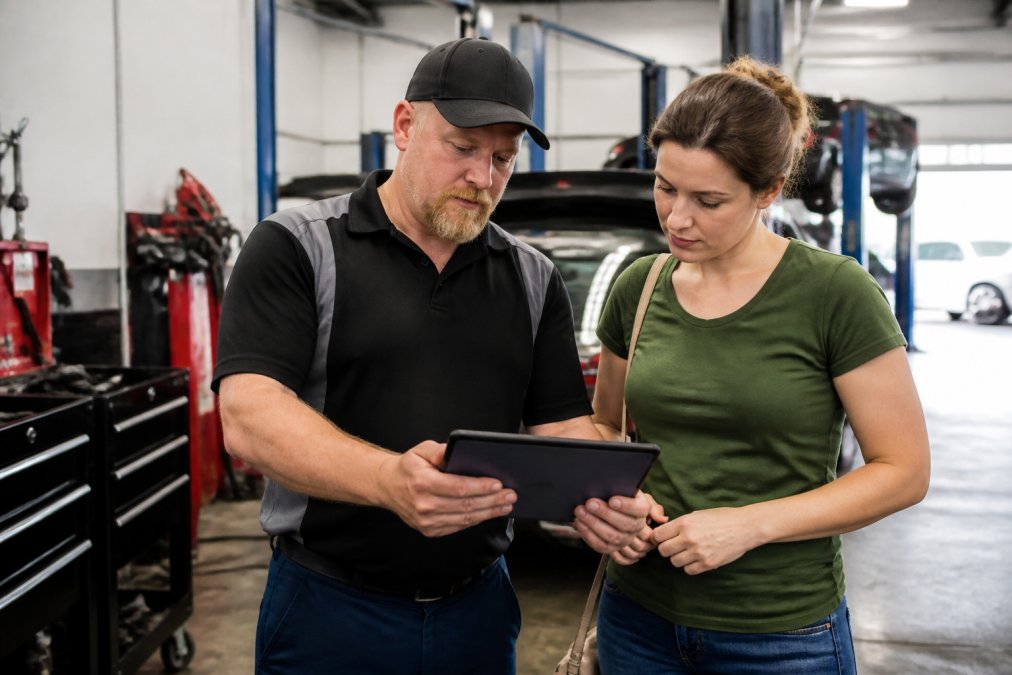
A digital vehicle inspection, or DVI, is a photo and video report of your vehicle’s condition that a technician compiles during service. Instead of telling you that your suspension needs attention, the technician shows you a picture of the worn bushing and explains why it matters.
DVI technology creates a vehicle health report you can review on your phone, complete with color-coded ratings for each component. This transparency protects you from unnecessary repairs because you can see the actual condition. It also protects the shop, because the documented evidence supports every recommendation.
Cost Transparency and Written Estimates
Cost transparency means you receive a written estimate before any work begins, and the final bill matches the estimate unless you approved changes. A shop that quotes a vague range over the phone and surprises you at pickup is not being transparent.
Quality assurance extends beyond the repair itself. A trustworthy shop stands behind its work, addresses any concerns after you leave, and keeps accurate records of every service performed. When a shop offers free pickup and drop-off within a reasonable radius, it removes a major barrier to getting routine maintenance done on schedule. That convenience, paired with honest estimates, signals a business built on repeat customers rather than one-time transactions.
Signs You Can Do It Yourself vs When to Call a Shop
Some maintenance tasks are genuinely DIY-friendly, while others require specialized tools and expertise. Knowing the difference saves you money without risking your safety.
You can reasonably handle basic tasks like checking fluid levels, replacing windshield wipers, and swapping an air filter. These require minimal tools and have clear instructions in your owner’s manual. If you have basic mechanical confidence, a battery replacement or changing a taillight bulb is also within reach.
Call a professional for anything involving brakes, suspension, steering, transmission, or electrical diagnostics. Brake pad replacement requires lifting the vehicle safely and specific tools to compress calipers. A transmission repair demands specialized equipment and training. Check engine light diagnostics requires a scan tool and the knowledge to interpret the data correctly.
Pro Tip
The cost of a diagnostic scan is almost always worth it. A shop that charges a reasonable diagnostic fee and applies it toward the repair if you approve the work is being fair. If the shop waives the fee entirely, ask why they are giving away their technician’s time.
The cost of a diagnostic scan is almost always worth it. A shop that charges a reasonable diagnostic fee and applies it toward the repair if you approve the work is being fair. If the shop waives the fee entirely, ask why they are giving away their technician’s time.
Your Auto Shop Visit Checklist: From Drop-Off to Pickup
A structured approach to your service visit reduces stress and protects you from oversights. But the process does not end when you drive out of the lot. The moments after pickup are when you verify the quality of the work performed. This checklist covers the full arc, preparation, drop-off, and the post-repair inspection that most car owners skip.
Before You Arrive: Document Everything
Write down every symptom you have noticed, including when it happens and under what conditions. A squeak that only occurs when turning left at low speed is valuable diagnostic information. Note whether the symptom is constant or intermittent, whether it changes with temperature, and whether it started after a specific event like hitting a pothole. Clear out personal items from the car, especially if the shop offers pickup service. Confirm the estimated completion time and whether you need a ride or can use their shuttle.
At Drop-Off: Set the Ground Rules
Review the written estimate and confirm the diagnostic fee structure. Ask whether the shop provides a digital vehicle inspection report when the diagnosis is complete. Confirm the shop has your correct phone number and will call before performing any work beyond the estimate. Ask who your point of contact will be, a service advisor or the technician directly, and get their direct line.
During the Repair: What Happens Behind the Scenes
A quality shop will keep you informed if the repair takes longer than estimated. If you do not hear from the shop by the promised completion time, call and ask for a status update. Delays happen, but a shop that communicates proactively is managing your expectations. If the shop discovers additional issues during the repair, you should receive a call with a revised estimate before any extra work begins. If you approved a digital inspection, expect photos or videos of the findings sent to your phone.
At Pickup: Verify Before You Drive Away
Do not rush through the checkout process. Review the final invoice against the original estimate line by line. Ask about any line items you do not recognize. Request a summary of what was done and what maintenance should come next. If you requested to see the replaced parts, ask for them before you leave. Confirm the warranty terms in writing and ask how to file a claim if something goes wrong.
The Post-Repair Quality Assurance Checklist
The work is not done when you leave the parking lot. Within the first few days after the repair, run through this verification checklist to confirm the work was performed correctly:
- Listen for new noises. A repair should not introduce new sounds. If you hear a new squeal, clunk, or vibration that was not there before, document it and call the shop immediately.
- Check for fluid leaks. Place a piece of clean cardboard under the car overnight. Any fresh fluid spots, oil, coolant, or transmission fluid, indicate a problem with the repair or a related issue the shop missed.
- Verify warning lights are off. The check engine light or ABS light should be off after the repair. If a light returns within a few days, the underlying issue was not fully resolved.
- Test the specific system repaired. If you had brake work done, test the brakes at low speed in a safe area before driving on the highway. If you had an alignment, check that the steering wheel sits straight on a level road.
- Monitor fluid levels. Check the oil level and coolant level after the first few drives. A repair that involved draining fluids should not show significant loss.
- Confirm the repair matches the estimate. Compare the final invoice to the original estimate. If the final total differs, you should have approved the change in advance.
What to Do If Something Is Wrong
If you notice an issue after pickup, call the shop within the first few days. Most reputable shops will address post-repair concerns promptly, especially if you have documentation. Bring the invoice and describe the issue clearly. A shop that stands behind its work will schedule a follow-up inspection without charge. If the shop resists or blames the issue on something else, escalate to the service manager. Your warranty on parts and labor is your protection, use it.
Watch Out
Do not ignore a new noise or fluid leak after a repair. Small issues caught early are inexpensive to fix. Waiting often turns a minor adjustment into a second major repair bill. Document the issue with photos or video and contact the shop the same day you notice it.
Do not ignore a new noise or fluid leak after a repair. Small issues caught early are inexpensive to fix. Waiting often turns a minor adjustment into a second major repair bill. Document the issue with photos or video and contact the shop the same day you notice it.
Conclusion: Your Next Step to Worry-Free Car Care
Finding the right repair shop takes effort, but the payoff is a vehicle that runs reliably and a mechanic you actually trust. Look for certified technicians who use digital inspections, provide written estimates, and explain their work in plain English. Those habits matter more than a convenient location.
TIPS Automotive combines certified technician expertise with honest, transparent service and same-day convenience. We handle everything from routine oil changes to complex repairs, offer free pickup and drop-off within a 10-mile radius, and use modern digital diagnostics to show you exactly what your vehicle needs. Call TIPS Automotive today and schedule your service with a team that treats your car like its own.
Frequently Asked Questions
How do I know if an auto repair shop is trustworthy?
Look for certified technicians, verified reviews, and clear communication. A trustworthy shop will show you a digital vehicle inspection with photos, explain repairs in plain English, and give you a written estimate before starting work. Ask about warranty coverage on parts and labor. Shops that rush you or push unnecessary services should raise red flags. Visit the facility to check cleanliness and organization, and see if the staff answers questions patiently.
Should I go to a dealership or an independent auto shop?
Dealerships specialize in your car’s brand and use factory parts, but they often charge higher labor rates. Independent shops typically offer lower prices and more personal service. Many independent shops employ certified technicians who work on multiple makes and models. If your car is under factory warranty, check the warranty coverage terms to ensure repairs at an independent shop won’t void it. For older vehicles, an independent shop often provides better long-term value.
What questions should I ask before authorizing car repairs?
Ask for a written estimate that itemizes parts and labor. Request a digital vehicle inspection with photos so you can see the issue. Ask if the shop uses OEM, aftermarket, or used parts and how that affects your warranty coverage. Inquire about the warranty on repairs and whether the shop stands behind its work. Finally, ask for a clear explanation of why the repair is needed now versus what can wait, so you can prioritize your spending.
How often should I get routine car maintenance?
Most manufacturers recommend service every 5,000 to 7,500 miles, but your owner’s manual is the final authority. Follow the severe-use schedule if you drive in heavy traffic, extreme temperatures, or dusty conditions. Routine car maintenance includes oil changes, tire rotation, fluid level checks, and battery testing. Stick to the service intervals in your manual and keep records of every visit. Regular maintenance prevents expensive breakdowns and extends your vehicle’s life.
This article was written using GrandRanker


Comments are closed